Showing posts with label Judaism. Show all posts

Tuesday, March 27, 2018

Death, Dying, and the Afterlife by Mark Berkson

Death, Dying, and the Afterlife: Lessons from World CulturesDeath, Dying, and the Afterlife: Lessons from World Cultures by Mark Berkson
My rating: 4 of 5 stars

This covered a variety of topics about death without going into a great deal of depth on any of the topics. For example, Berkson gave an entire lecture each to the Christian, Jewish, Islamic, Hindu, and Buddhist, and Confucian concept of death and death rituals (6 lectures total). I see why that's important but the course is already a summary of the concept and experience of death in human society. Throwing in summaries of all the world's religions - mostly information of which I was already aware- didn't leave a lot of time for everything else about death. I also felt like the lecture on vegetarianism- again, something I've read about at length in other more through sources- was really not to the point.

View all my reviews

Sunday, September 3, 2017

Holy Bible: New International Version

Holy Bible: New International VersionHoly Bible: New International Version by Anonymous


I started at the beginning of the year and it took about an hour a day for 8 months. Sometimes I'd skip a few days, but then sometimes I would do 2 hours to make up for falling behind. The Old Testament is much longer obviously and I think I made it feel even longer by reading The New Testament's Gospels, The Old Testament, and then the rest of the New Testament. I spent 6 of the 8 months on the Old Testament and only 2 months on the New Testament.

A few thoughts on the Old Testament, it's very long, and I think there's a lot of merit in the Jewish tradition of focusing on the first five books (the Torah). Genesis and Exodus are particularly interesting. [Repeat from my Tanakh review:] Much of the rest of the Old Testament is wars and God getting angry for his worshippers breaking rules, especially marrying those of other religions. A few notable exceptions: Song of Songs is very romantic, Jonah is the stuff of great adventure books, and the locusts are as scary as a Steven King novel.

As for the New Testament, the Gospels are really interesting, in particular, the Gospel of Matthew. Not to be outdone by the locusts in the Old Testament, Revelation is some scary stuff.

Since I finished the Bible in less than a year, I'm going to try to read nonfiction books about the Bible for the rest of the year.


View all my reviews

Tuesday, August 8, 2017

The Tanakh

JPS Tanakh (student edition)Tanakh by Anonymous


Technically, I read the Old Testament, not The Tanakh, but it's the same books in a different order. It took me 6 months to finish.

As a rule, I don't rate or review Holy Books but I'll mention a few things that stood out to me. The Torah/Pentateuch is pretty tightly organized compared to the rest. The rules in Leviticus particularly grabbed my attention, which I wrote more specifically about in my Torah "review."

Much of the rest of the Old Testament is wars and God getting angry for his worshippers breaking rules, especially marrying those of other religions. A few notable exceptions: Song of Songs is very romantic, Jonah is the stuff of great adventure books, and the locusts are as scary as a Steven King novel.

The Christian order leaves a bit to be desired by ending on Malachi. The order of the final Jewish book is either uncertain or was not precisely set but ending on Chronicles is maybe a little better with the rebuilding of Jerusalem.

View all my reviews

Thursday, May 4, 2017

The Torah: The Five Books of Moses

The Torah: The Five Books of MosesThe Torah: The Five Books of Moses by Anonymous


The Torah is also the first five books of the Old Testament of the Christian Bible, the Pentateuch. From Wikipedia: Bereshit/Genesis (בְּרֵאשִׁית, literally "In the beginning"); Shemot /Exodus (שִׁמוֹת, literally "Names"); Vayikra/Leviticus (ויקרא, literally "And He called"); Bəmidbar/Numbers (במדבר, literally "In the desert [of]"); Devarim/Deuteronomy (דברים, literally "Things" or "Words")."

I'm not going to rate or review holy books, but I will mention a few things mostly for my own reference in case I want to return to something specific later.

Genesis has the stories of Adam and Eve, Noah, Abraham and Sarah, Isaac and Rebekah, Jacob and his two wives Leah and Rachel, and finally Joseph. Joseph becomes a big deal in Egypt because he is an effective food administrator.

After Genesis, the other four books are about Moses. Exodus is the most revolutionary. Leviticus has a lot of rules with harsh punishments. Numbers is largely a census that requires some skimming. Deuteronomy is very violent in the beginning, and then becomes a summary of the story of Moses and the rules of Leviticus. And then it becomes very violent again.

Some of the rules are fascinating. We hear about Biblical prohibitions of gay relationships all the time, but sleeping with a man's wife is also punishable by death (that would affect a lot of Congressmen which is perhaps why they are so silent on the matter). If a man rapes an unengaged virgin woman , the rapist must marry her. (But if she was engaged to a man, the rapist must be put to death.) Men may have multiple wives, but he can't disinherit his first born son even if the first born son comes from the wife he doesn't love as much. No wearing linen and wool together. A widow must marry her brother-in-law unless he totally refuses to marry her, which he shouldn't do. There is a harsh punishment for a step-brother and step-sister that marry too, and various other marriages that don't involve blood relations. There are so many more but these stood out in my memory for obvious reasons.

Also, I'm strangley curious about the "Nephilim":

"When people began to multiply on the face of the ground, and daughters were born to them, the sons of God saw that they were fair; and they took wives for themselves of all that they chose. Then the Lord said, 'My spirit shall not abide in mortals forever, for they are flesh; their days shall be one hundred twenty years.' The Nephilim were on the earth in those days—and also afterward—when the sons of God went in to the daughters of humans, who bore children to them. These were the heroes that were of old, warriors of renown." (Genesis 6:1-4, New Revised Standard Version)

and:

"The Lord said to Moses, 'Send men to spy out the land of Canaan, which I am giving to the Israelites' . . . So they went up and spied out the land . . . And they told him: '. . . Yet the people who live in the land are strong, and the towns are fortified and very large; and besides, we saw the descendants of Anak there.' . . . So they brought to the Israelites an unfavorable report of the land that they had spied out, saying, 'The land that we have gone through as spies is a land that devours its inhabitants; and all the people that we saw in it are of great size. 33 There we saw the Nephilim (the Anakites come from the Nephilim); and to ourselves we seemed like grasshoppers, and so we seemed to them.'" (Numbers 13:1-2; 21; 27-28; 32-33. New Revised Standard Version).

Numbers (and I think Deuteronomy?) also mention Anak, the Anakim, and the Rephaim.

View all my reviews

Friday, February 10, 2017

The Bible: A Biography by Karen Armstrong

The Bible: A Biography (Books That Changed the World)The Bible: A Biography by Karen Armstrong
My rating: 4 of 5 stars

Armstrong writes about the interpretation and reinterpretation of the Bible, over and over again through the centuries. It has a similar thrust to her book, The Case for God, but it is much shorter because it focuses only on the text of the Bible and not the overall concept of God. It was a little boring in its early history and sped through contemporary history, and it wasn't as strong a thesis as The Case for God, but it was a solid read.

View all my reviews

Thursday, February 2, 2017

I and Thou by Martin Buber

I and ThouI and Thou by Martin Buber
My rating: 3 of 5 stars

I recognize that this rating/review says more about me than the book, but I just didn't understand most of this book. To the extent that (I think) I understood some of the ideas, it was because I have previously encountered the ideas elsewhere, such as the Judeo-Christian tradition or the ideas of consciousness in Buddhism. According to Kaufman, Buber himself couldn't elucidate some of these passages. Life is already a mystery- Buber 's ambiguous writing isn't particularly helping me navigate it. Since I own the book, maybe I'll try again when I'm older and wiser.

View all my reviews

Thursday, August 18, 2016

When I Was a Child I Read Books Marilynne Robinson

When I Was a Child I Read Books: EssaysWhen I Was a Child I Read Books: Essays by Marilynne Robinson
My rating: 5 of 5 stars

This collection of essays by Robinson on religion, politics, patriotism, and science is extremely moving. I think every American should read it. The collection is front-loaded and the best essays are at the beginning, but those are so remarkable. Robinson has read and studied widely, and the depth of her understanding is inspiring. Her genius with expressing her thoughts in writing is even more awe-inspiring, and almost every paragraph in the early essays made my heart leap.

View all my reviews

Friday, July 22, 2016

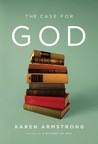
The Case for God by Karen Armstrong

The Case for GodThe Case for God by Karen Armstrong
My rating: 5 of 5 stars

Well, that explains everything.

I've read other Karen Armstrong books, but this goes in a different direction. She reviews the history of God and the relationship between philosophy, science, and religion in different cultures and times. She uses all this history to make a very compelling case for God generally, but also for the merits of Judaism, Christianity, Islam, and Buddhism. She also makes a compelling case against positivism, "the belief that science is the only reliable means to truth." She doesn't do this lightly, she understands the importance of science today, and she discuss scientific progress from Copernicus to the modern debate in physics about string theory.

She also discusses what she believes are the origins and causes of our modern religious conflicts. She recommends solutions that make a lot of sense.

Karen Armstrong is a powerhouse of religious knowledge and practice. And she clearly also did a lot of research about science. This book is long, sometimes repetitive, and sometimes difficult to understand. I feel like I came to this book at a good time: after having learned about the practice of meditation and the debates about string theory. However, there's a lot more background I wish I brought to the book in the realm of philosophy, history, and religion.

Despite the challenge, or because of the challenge, I think it's well worth it for the religious and non-religious alike. It did for me what I hope every book I open to will do for me- change the way I see the world.

View all my reviews
Related Posts Plugin for WordPress, Blogger...