Showing posts with label happiness. Show all posts

Tuesday, August 27, 2019

When by Daniel H. Pink

When: The Scientific Secrets of Perfect TimingWhen: The Scientific Secrets of Perfect Timing by Daniel H. Pink
My rating: 4 of 5 stars

A short book about how timing affects both our personal decisions and business plans. There is definitely some repeat information that most people are aware of already, but the book is so short that it's worth reading to get a sense of the overall psychological impact of timing decisions correctly.

View all my reviews

Monday, June 26, 2017

Bright-Sided by Barbara Ehrenreich

Bright-Sided: How the Relentless Promotion of Positive Thinking Has Undermined AmericaBright-Sided: How the Relentless Promotion of Positive Thinking Has Undermined America by Barbara Ehrenreich
My rating: 4 of 5 stars

I appreciated her critique of the positive-thinking culture in culture and business. I find the former irritating and the latter oppressive. The research shows that pessimists make the best attorneys. I've always suspected that would be true in a number of other fields where anticipating and averting disaster would be beneficial to a cheery facade. But the demands on sick people to be positive and even to pray are exhausting. What are we to make of how we've treated both the most positive and religious people who die from cancer- not to mention the grumps and atheists we tortured with this advice right to the grave? I agree with the premise that there is a sinister intersect of religion, magic and the corporate world in all this victim-blaming.

That said, I think Ehrenreich wasn't very fair to the scientific study of happiness and positive psychology. (Says the person who is obsessed with Jonathan Haidt and his books.)

View all my reviews

Friday, April 14, 2017

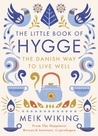
The Little Book of Hygge by Meik Wiking

The Little Book of Hygge: The Danish Way to Live WellThe Little Book of Hygge: The Danish Way to Live Well by Meik Wiking
My rating: 4 of 5 stars

This book is itself hygge. It was fun and relaxing to read, with cute little illustrations throughout, and I finished it in about the time I would spend with friends in an evening. I also wore comfy pants while reading it.

The author is a happiness researcher so everything he writes accords with things I've read about the happiness studies, but there's a different angle he explores here, and lots of things very particular to the Danish people. Worth the short read for sure.

View all my reviews

Tuesday, March 7, 2017

The Bed of Procrustes by Nassim Nicholas Taleb

The Bed of Procrustes: Philosophical and Practical AphorismsThe Bed of Procrustes: Philosophical and Practical Aphorisms by Nassim Nicholas Taleb
My rating: 4 of 5 stars

This is not like Taleb's other three "Incerto" books. This is a book of aphorisms. Initially, I had a negative reaction to this because I was expecting a book like Taleb's other books about predictions and random events. I think I also had a negative reaction because I'm mostly familiar with Buddhist aphorisms (and not with the classical Greek ones Taleb cites), and Taleb's attempt to write a book of aphorisms seemed arrogant.

But then I actually read them, and they're pretty good, and they fill the need for aphorisms for the modern increasingly complex world. It's a really short book so you can read it quickly, but more likely you need to think about most of the sentences for longer than you otherwise would. This might even require a rereading.

View all my reviews

Sunday, March 5, 2017

The Black Swan by Nassim Nicholas Taleb

The Black Swan: The Impact of the Highly ImprobableThe Black Swan: The Impact of the Highly Improbable by Nassim Nicholas Taleb
My rating: 5 of 5 stars

This was a good expenditure of my time. Taleb makes a coherent argument about things I've previously thought about but vaguely dismissed both because of my desire to be normal and my fear of potential "black swans." I say "vaguely dismissed" because I can't actually dismiss my fears by just telling myself they are irrational; I can only avoid taking action to prevent the consequences.

I didn't totally understand all the writing about models in Part 3, but this doesn't seem totally necessary to understanding his larger points.

View all my reviews

Sunday, January 15, 2017

Peace Is Every Step by Thich Nhat Hanh

Peace Is Every Step: The Path of Mindfulness in Everyday LifePeace Is Every Step: The Path of Mindfulness in Everyday Life by Thich Nhat Hanh
My rating: 5 of 5 stars

The first time I read this book I didn't appreciate the concept of meditation or the science behind it. This is a short and simple book about meditation that reads almost as a guided meditation might. I recommend to anyone that wants to actually try meditation and not just read about it.

View all my reviews

Saturday, January 7, 2017

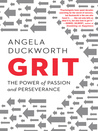
Grit by Angela Duckworth

Grit: Passion, Perseverance, and the Science of SuccessGrit: Passion, Perseverance, and the Science of Success by Angela Duckworth
My rating: 4 of 5 stars

Understanding this author's points requires some subtlety of thought that, reading some of the reviews, some people seem to miss. Duckworth defines grit numerous ways but it's basically an ability to do difficult things and to try again after failing. Grit is a very important factor in both success and happiness. Grit can be learned and practiced.

What this book does not say is that everyone has equal access to grit. She specifically says that in studies of mice that were shocked without any control over their own suffering could not function as well in other tasks as mice that had some control over their suffering. The mice became victims of learned helplessness. The problem here is that unlike the sections about grittiness, there were no real life examples of human beings suffering these conditions (though arguably there was an example of one person overcoming this condition with a lot of help from other people). There is some discussion of income inequality, particularly with regards to a lack of extra-curricular programs that teach grit in poor schools, but there wasn't any kind of exploration of institutionalized racism, sexism, and poverty- oftentimes working in conjunction to "shock" human beings repeatedly through years and decades of their life without any control over these shocks.

Obviously, this isn't Duckworth's area of expertise, and she only cites the mice studies to add fullness to her exploration of grit. The reason for concern though is that her grit philosophy is very closely adjacent to the pull-yourself-up-by bootstrap mentality that excuses the persistence of income inequality, racism, and sexism because these are "not the most important reasons" for the failure of particular people or societies to thrive.

Other people doubt Duckworth's arguments because they perceive talent to be of crucial importance in success in various physical and creative fields. I find this line of thinking to be less interesting or important because it's difficult to know how much hard work (and "grit") others have invested in particular endeavors. With the exception of certain child prodigies, age isn't a good proxy for hours of focused growth practice. (And there are plenty of child prodigies that don't accomplish anything beyond what average adults later accomplish.) Except in physical endeavors where a particular body type is necessary, I do tend to believe that the highest levels of "talent" can be learned. But for that talent to be learned your main focus in life probably needs to be that one thing, and you need other people support your single-minded focus, oftentimes by literally monetarily supporting you. (Or loaning you money, or paying you at such a high rate that you can take a long leave from paying work, and sometimes by your spouse doing all the housework.)

View all my reviews

Sunday, December 4, 2016

Payoff by Dan Ariely

Payoff: The Hidden Logic That Shapes Our Motivations (Ted Books)Payoff: The Hidden Logic That Shapes Our Motivations by Dan Ariely
My rating: 4 of 5 stars

A very short book about what motivates us at work, in our families, in our search for a meaning in life. Most of the results are based on actual research in behavioral economics.

In short: control over our lives, creativity, the hard work we put into things, personalizing our work, being personally appreciated at work, love and sacrifice for those we're committed to, and having a sense of legacy in our work or family life.

View all my reviews

Monday, November 14, 2016

Predictably Irrational by Dan Ariely

Predictably Irrational: The Hidden Forces That Shape Our DecisionsPredictably Irrational: The Hidden Forces That Shape Our Decisions by Dan Ariely
My rating: 5 of 5 stars

Ariely explains how all humans are irrational in certain circumstances. He discusses how we attribute value to something, and how marketing exploits us to attribute more value to something. How we regularly make choices that reduce our ability to be content with our choices.

He explains how money itself - or it's absence- causes us to view decisions in an entirely irrational light.

Other things influence our decisions in a way we would ourselves not predict: social norms, arousal, placebos, and even the cost of placebos.

I think this is an extremely important book in helping people to understand how very difficult it is for all of us to be objective, though we all believe ourselves to be.

View all my reviews

Monday, July 11, 2016

Man's Search for Meaning by Viktor E. Frankl

Man's Search for MeaningMan's Search for Meaning by Viktor E. Frankl
My rating: 5 of 5 stars

This is one of the best nonfiction books I've read. A huge part of why this book is so good is the because the source of the book is an author who has gone through and seen so much suffering. The same message wouldn't seem as valid coming from someone else. It's full of observations that anyone who has suffered can relate to- but that many who have not yet suffered have no familiarity with. And yet, the suffering Frankl experienced and witnessed is so extreme, that it's difficult to pity yourself-- or even doubt yourself-- in the face of it.

The first half of the book describes Frankl's experience in four concentration camps during WWII and the second part of the describes his particular brand of psychotherapy called "logotherapy." This therapy seeks to help people find meaning in their lives and even in their suffering.

Frankl doesn't try to tell you what is meaningful (though there is a strong bias towards helping others in the examples he gives that seems correct to me) but rather that person should pursue whatever is meaningful to them in the particular situation that they're in.


View all my reviews

Thursday, April 28, 2016

Daring Greatly by Brené Brown

Daring Greatly: How the Courage to Be Vulnerable Transforms the Way We Live, Love, Parent, and LeadDaring Greatly: How the Courage to Be Vulnerable Transforms the Way We Live, Love, Parent, and Lead by Brené Brown
My rating: 4 of 5 stars

I didn't love it. I wanted to love it. I've been reading a lot of scientific research on mindfulness, self-compassion, self-improvement, and happiness lately, and this just doesn't stand up to a lot of the other material that I've been reading. (If you're curious just look at mindfulness list.) I think that if this were the first or only such book I read I would have appreciated it more.

This one is mostly just about self-compassion and self-love. The way to convince yourself that you are worthy of love is by engaging in courage, compassion, and connection. Hard.

Update 1/2018: I read it again and liked it much better this time. I'm not sure why. Maybe I wasn't considering each of her points separately and completely before. Maybe because I've read more feminist writing since then? Technically, this isn't specifically feminist because she discusses how the same issues of vulnerability, fear, and shame corner men, but it still resonates with feminist themes. (And expecting men to act in gender-conforming ways is also part of what feminism opposes.)

View all my reviews

Saturday, April 23, 2016

What Got You Here Won't Get You There by Marshall Goldsmith

What Got You Here Won't Get You There: How Successful People Become Even More SuccessfulWhat Got You Here Won't Get You There: How Successful People Become Even More Successful by Marshall Goldsmith
My rating: 5 of 5 stars

I went into this book very dubious because I haven't had a lot of great experiences with "business" books, though I keep trying. My efforts were finally rewarded -- this book is terrific. I might like it so much though because it's highly applicable outside a business context. It might also have been named, "How to Play Well With Others" or "How to Improve Your Marriage."

The book has a lot of concrete solutions for how to find out what your major problematic flaws are (if you're not already aware of them) and how to implement a solution or cure to that problem by getting the very people you're annoying to help you solve that problem.

View all my reviews

Wednesday, April 6, 2016

Search Inside Yourself by Chade-Meng Tan

Search Inside Yourself: The Unexpected Path to Achieving Success, Happiness (And World Peace)Search Inside Yourself: The Unexpected Path to Achieving Success, Happiness by Chade-Meng Tan
My rating: 3 of 5 stars

This book was a little better than my rating suggests, but I've recently read a lot of books on the topics addressed in this book- happiness, mindfulness, meditation, and motivation, and this is the least impressive book on these topics. (Also assome other reviewers have commented, repeatedly bringing up google and name-dropping is distracting and annoying.)

View all my reviews

Monday, April 4, 2016

Switch: How to Change Things When Change Is Hard by Chip Heath

Switch: How to Change Things When Change Is HardSwitch: How to Change Things When Change Is Hard by Chip Heath
My rating: 4 of 5 stars

Each chapter covers a different concept to employ while attempting to bring about change. Some of the concepts are not very distinct though so there aren't many things you can directly use. It's a nice follow-up to Happiness Hypothesis.

View all my reviews

Thursday, March 31, 2016

The Happiness Hypothesis by Jonathan Haidt

The Happiness Hypothesis: Finding Modern Truth in Ancient WisdomThe Happiness Hypothesis: Finding Modern Truth in Ancient Wisdom by Jonathan Haidt
My rating: 5 of 5 stars

This is the best book I've read so far on happiness, love, and mindfulness, morality, and life purpose specifically because unlike the other books that I've been reading on the topic it combines science and philosophy on all of these topics instead of taking them individually. The author is not afraid to tackle some controversial topics, necessary because of the discussion of how an innate disgust system relates to our sense of morality. The author is honest about his own "bias" as he is not religious, but he maintains a professional respect towards world religions and seeks to understand what they can contribute to an understanding of psychology, happiness, and even societal well-being.

View all my reviews

Tuesday, March 29, 2016

Waking Up by Sam Harris

Waking Up: A Guide to Spirituality Without ReligionWaking Up: A Guide to Spirituality Without Religion by Sam Harris
My rating: 5 of 5 stars

I thought this book was really interesting. I think his negative view of religion hurt how broadly available this book will be to others. However, I thought his interpretation of some of the science and his unique descriptions of his experiences with and understanding of mindfulness and meditation is invaluable to someone trying to understand consciousness and mindfulness.

View all my reviews

Thursday, March 24, 2016

Love 2.0 by Barbara L. Fredrickson

Love 2.0: How Our Supreme Emotion Affects Everything We Feel, Think, Do, and BecomeLove 2.0: How Our Supreme Emotion Affects Everything We Feel, Think, Do, and Become by Barbara L. Fredrickson
My rating: 5 of 5 stars

This book explains the scientific underpinnings of "positivity resonance," mindfulness, and meditation. Frederickson's book is more all encompassing than the the Sharon Salzberg book I read recently, "Real Happiness: The Power of Meditation" but supports the usefulness of the practices described in that book.

Also, unlike "Waking Up" by Sam Harris, which I'm currently reading, there is no positive or negative discussion of religion which I think makes it more widely accessible.


View all my reviews

Tuesday, March 1, 2016

Real Happiness: The Power of Meditation by Sharon Salzberg

Real Happiness: The Power of Meditation Real Happiness: The Power of Meditation by Sharon Salzberg
My rating: 4 of 5 stars

I think this is a great book, the meditation exercises make almost an immediate difference. I left off a star because it was a bit boring to get through the beginning and I almost decided to stop reading it. But it actually gets progressively more interesting- both the reading and the practice.

It talks about different types of meditation: 1- Following the breath, 2- Body Scan, 3- Body Sensations 4- Walking Meditation, 5- Meditation of Thoughts or Emotions, 6- Calling up difficult emotions, 7- Lovingkindness. The latter was my favorite and I found it to be the most interesting and helpful so I'm glad I stuck with the book to the end.

View all my reviews

Sunday, May 31, 2015

The How of Happiness by Sonja Lyubomirsky

The How of Happiness: A Scientific Approach to Getting the Life You WantThe How of Happiness: A Scientific Approach to Getting the Life You Want by Sonja Lyubomirsky
My rating: 3 of 5 stars

I don't recommend the ebook!

You need to be able to use this book like a workbook and take a test and flag the activities you intend to do, so unfortunately it doesn't work well as an ebook.

Also, given how inspiring I found the konmari book, this book fails to inspire me to engage in the happiness activities even though I am extremely motivated otherwise.

That said, I think the methods would make a person happier.

View all my reviews
Related Posts Plugin for WordPress, Blogger...