Showing posts with label politics-R. Show all posts

Thursday, December 10, 2020

Liberal Privilege by Donald Trump Jr.

Liberal Privilege: Joe Biden And The Democrats' Defense Of The IndefensibleLiberal Privilege: Joe Biden And The Democrats' Defense Of The Indefensible by Donald Trump Jr.
My rating: 1 of 5 stars

First of all, this is self-published which is a huge RED FLAG that it's horrendously written, edited, and not fact-checked. I can confirm this is the case.

1) Biden versus Trump health. Donald Jr. is correct that the media has not harped on Biden's aneurysms, to the point that if I'd heard about it, I had forgotten about it. I read Promises to Keep but don't recall that fact in there but did confirm it. But okay, Biden has been so forthcoming about his health that we even know about his aneurysms. Donald Jr. is really disingenuous about President Trump's health. We know he constantly eats McDonald's, can barely walk around (forget jogging on a treadmill that's absurd), and lies about everything. Dr. Ronny Jackson is now a Republican congressman, and Republican congressman have fallen in line behind Trump regardless of his policies, words, lies.

We've seen Biden bicycling around, and Biden suffers from a life-long stutter, not mental impairment as Donald Jr. would have you believe. But Donald Jr. doesn't mention the stutter AT ALL in his assessment because he's not interested in reality or educating the public, (hence the self-publishing) this is a lengthy ad in the form of a book. Now yes, the many political memoirs I read were also ads, but they were about the candidate's accomplishments not baseless attacks on their competition.

2) The DNC did not pick Joe Biden, primary Democratic voters did. He wasn't my first choice at all, but lots of CONSERVATIVE Democrats did want him. "Leftist extremists" typically called progressives, have virtually no power in the Democratic party. Biden is centrist, Nancy Pelosi is centrist, as are the majority of Democrats with any power. DT Jr. attacks Biden both for being too liberal, and too conservative, and for being racist to boot. I don't disagree that Biden has exhibited racism in the past (one of the reasons I supported more progressive candidates) or that he is very conservative, but President Trump has definitely exhibited more racism and more recently. So his argument completely falls apart logically.

3) This one is a perfect example of how DT Jr. constantly twists logic. Did Donald Trump Jr. commit treason? He doesn't discuss the details at all while dismissing the entire thing as impossible. Well, meeting with Russian informants to get information about Hillary Clinton is a crime that is dangerous to our country: a) You aren't supposed to receive presents from foreign countries that might make you beholden to them, b) they shouldn't have "kompromat" or secrets of yours that they may use for blackmail, and finally, c) you shouldn't allow foreign countries to influence our elections to their benefit, and I would add, d) Russia is our enemy in that it seeks to divide and harm our population so that it may follow its policy of local dominance over its neighboring countries and world hegemony more generally. DT Jr.’s emotional but not logical stance against this position is that the punishment for treason is the death penalty. No one of consequence in the Democratic party has called for the death penalty, or even really supports the death penalty more generally. The majority of death sentences that have been carried out in recent years have been by conservative leaders who have not issued pardons or delays. (By contrast, Steve Bannon has called for the beheading of private US citizens for merely advocating the truth.) Regardless, none of this contradicts that DT Jr. committed crimes for which he should rightfully pay. President Trump is well aware of this which is why he seeks to try to pardon DT Jr. before he has even been rightfully charged with these crimes.

4) He's right about political hypocrisy regarding sexual assault- something both Democrats and Republicans engage in. Um hello Roy Moore? https://www.washingtonpost.com/invest...
And then DT Jr. also does by not mentioning the many sexual assault and rape accusations against his father and his father's admission of sexual assault on tape.

5) Did media support liberal candidates? Or did media love all the money they made from the spectacle that was Donald Trump in 2016? Did they pound Hillary Clinton for her email server issue?

6) I'm old enough to actually remember what actually happened with regards to Russian election interference. I also read the Mueller Report (written by lifelong Republican Mueller) and listened to our intelligence agencies that were all in agreement about the facts but not in agreement with the Trumps. The intelligence agencies also said there was no truth to the accusation against Joe Biden behaving inappropriately with regards to Hunter Biden's business. Continuing to push this narrative goes beyond lying to participating in Russian efforts to destabilize our elections and our democracy and to divide our people.

On and on, the pattern in this book is the same, DT Jr. attacks Biden or his family for a small or untrue infraction and fails to mention the huge MOTES in the Trump families' eyes. It's infuriating and misleading and it gets one star for making the world a worse place.

View all my reviews

Monday, November 2, 2020

Win Bigly by Scott Adams

Win Bigly: Persuasion in a World Where Facts Don't MatterWin Bigly: Persuasion in a World Where Facts Don't Matter by Scott Adams
My rating: 1 of 5 stars

The thesis of this book is that Trump is a master persuader. Let's grant him this even though he has only persuaded 30% of the US population and no world leaders. I suppose he was more persuasive than the other (too many) Republican primary candidates. The concept that he was more persuasive than Hillary Clinton is low grade ridiculous since she persuaded 3 million more people than Trump.

Here's another central proposition in this book: that Trump is not incompetent. See Adams wrote this at the beginning of the administration when that was even moderately believable. Shutting down the pandemic response, and increasing covid deaths in the US say otherwise.

Also he claims that Trump is often "directionally" correct but operates in the realm of hyperbole. But he's not "directionally" correct. And Adams claiming Trump is "directionally" correct is ridiculous levels of bias in favor of Trump no matter how many times Adams says it is not.

Another main theme is that Scott Adams is so smart. He doesn't even understand the most basic concepts about racism. Of course, a racist can hug a black person or kiss a black baby. What utter nonsense. Adams claims he was able to predict elements of the 2016 election accurately! But again, reading this in 2020, you can see that Hillary Clinton is still healthy, Donald Trump has come out in support of white supremacists repeatedly and it was the election of Trump, that erupted in violence in the US. The idea that Trump supporters are not violent and Clinton supporters is divorced from reality. Adams will of course disregard facts in favor of emotions. Possibly because Adams gets everything wrong.

Surprise surprise, Adams is also a climate denier in that he feels that scientists could be in a mass delusion which is just not how science works. Yes, sometimes scientists are wrong but the point is to follow the experiments and analysis and studies until there is something that contradicts it. After decades, there isn't much doubt left about climate science.

Here are some Trump strategies:
1) Refocusing your energy on what he wants to discuss even if he's claiming something crazy. You want the critics to scream so you get attention on what you want.

2) "Setting the table" You can negotiate down from your crazy stance to a more moderate position where you are the winner. (Not at all what Trump has done - he's insisted on the crazy stance.)

3) Continue to repeat the big lie after they've been completely debunked. Adams didn't phrase it like this because he thinks comparisons to Nazis are hyperbole. Or maybe Adams is wrong again.

At a certain point, I started wondering if Adams is mentally ill as he has delusions of grandeur and thinks he can predict the future. I'm not kidding.

This book gets 1 star for making the world a worse place than if Adams had not written it.

View all my reviews

Tuesday, October 20, 2020

It Was All a Lie by Stuart Stevens

It Was All a Lie: How the Republican Party Became Donald TrumpIt Was All a Lie: How the Republican Party Became Donald Trump by Stuart Stevens
My rating: 5 of 5 stars

This is pretty much what I want to say to Senator Ben Sasse and all the other Republicans who claim to be "reasonable." Let's never forget how they betrayed everything our country stands for because they were afraid of losing power.

View all my reviews

Monday, October 19, 2020

Raising Trump by Ivana Trump

Raising TrumpRaising Trump by Ivana Trump
My rating: 3 of 5 stars

This is more of an autobiography of Ivana Trump with a special focus on her children (and written contributions from Don Jr, Ivanka, and Eric). She’s had an interesting life and her book is very readable. There’s barely a bad word about Donald Trump and that’s just as well, because despite picking this book, I am sick of reading about him. It was an accidental break from him.

I don’t buy it though. 1) She claims Donald wasn't particularly rich when she married him. Compared to what? He paid the tab for her entire table of models, right? And we all know he inherited all of his wealth from his father and made investments that only cost him money. 2) Also, hard work is nice, but what about all the hard-working employees Trump failed to pay? 3) I'm glad that she feels she worked hard at the family business but who was going to tell her otherwise if she was slacking? How would she have qualified for such a job in the first place if it wasn't the family business? 4) But okay, supposing she did work hard, if you happen to be at the intersection of hard work and good luck it’s easy to say that hard work got you where you are. But what about all the many people who work just as hard for their whole lives and don’t get a fraction of the pie? To overlook them or to purposely look away is to miss the entire story.

I don’t buy her biased view of her children, here they are supporting the worst administration in my lifetime so I snorted reading about her children’s charities when Donald Trump stole money from his and Eric resigned from his for reasons that are unclear to me from news stories.

It's my experience that people that struggle in communist regimes tend to over-value ambition and the accumulation of money precisely because their lack of political freedom was tied to a lack of economic freedom. I despise tyranny, and I am not advocating laziness, but I think the helping professions are of greater spiritual value than those in which the only focus is the accumulation of wealth. And when the accumulation of wealth results in active harm to employees (such as those Donald did not pay) it is an evil.

View all my reviews

Wednesday, February 19, 2020

A Warning by Anonymous

A WarningA Warning by Anonymous
My rating: 3 of 5 stars

Good part: viewpoint of a conservative in the White House seeing things first hand.

Bad part: absolutely everything in the book is readily available in the newspapers.

View all my reviews

Friday, December 20, 2019

I Think You're Wrong (But I'm Listening) by Sarah Stewart Holland

I Think You're Wrong (But I'm Listening): A Guide to Grace-Filled Political ConversationsI Think You're Wrong (But I'm Listening): A Guide to Grace-Filled Political Conversations by Sarah Stewart Holland
My rating: 3 of 5 stars

Somewhat interesting, but not terribly deep. Worth considering some of the cooperative spirit discussed in this book and I'm interested in listening to the podcast, "Pantsuit Politics." I recommend "The Righteous Mind" by Jonathan Haidt which is also about understanding the other side of the political aisle but with scientific research.

View all my reviews

Tuesday, September 3, 2019

C Street by Jeff Sharlet

C Street: The Fundamentalist Threat to American DemocracyC Street: The Fundamentalist Threat to American Democracy by Jeff Sharlet
My rating: 4 of 5 stars

Completely horrifying account of the contradictory and often corrupt fundamentalist fervor in our government, in our military, and even influencing countries abroad. And it's not limited to one party, here are a few of leaders mentioned in the book:
Sens. Sam Brownback, R-Kan.; Tom Coburn, R-Okla.; Jim DeMint, R-S.C.; and John Ensign, R-Nev.
Reps. Michael F. Doyle, D-Pa.; Heath Shuler, D-N.C.; Bart Stupak, D-Mich.; and Zach Wamp, R-Tenn.

At one point, Sharlett summarizes the book that this is about the fundamentalist ideas that seek to subsume the ideas (and presumably the values) of democracy.

View all my reviews

Monday, February 18, 2019

Leadership In Turbulent Times by Doris Kearns Goodwin

Leadership: In Turbulent TimesLeadership In Turbulent Times by Doris Kearns Goodwin
My rating: 4 of 5 stars

This is a very enjoyable read about Lincoln, the two Roosevelts, and Johnson. I'm not sure if I learned specific things about leadership, but I loved reading about how these Presidents fought for the rights of the poor and minorities.

View all my reviews

Wednesday, December 19, 2018

Decision Points by George W. Bush

Decision PointsDecision Points by George W. Bush
My rating: 4 of 5 stars

President Bush states at the beginning that this book is not a typical memoir but will just focus on his big decisions in his office as President. But then it starts out as a typical memoir, just super not chronological. It’s extremely disorientating. But this is largely remedied starting on Chapter 4 where he really does start to focus issue by issue.

He took appointing his advisors and personnel extremely seriously: especially those involved with national security and economics. However, he didn’t actually listen to Treasury Secretary Paul O’Neill who opposed tax cuts. (http://old.post-gazette.com/nation/20...)

It's notable, given today’s climate, that G.W. Bush was at least interested in policy, even if in my opinion, it was misguided policy. For example, he mentions at the beginning that he opposed the regulations that Democrats wanted to impose on oil. I mean, hello? We all know about global warming, oil spills, non-renewable energy sources, and terrorism coming from countries profiting from oil? Right? Hello?

It was enlightening to view his perspective on stem cell research. It was particularly interesting that he had rebranded himself as the first person who allowed federal funding for stem cell research because he allowed it for lines where the embryos had already been destroyed. While I find his arguments in favor human dignity very much worth considering in light of the underpinnings to human rights, I'm not sure how he squared that with the use of torture on terrorism suspects. His defense of the "torture" (he disagrees it is torture) is that it was legal (debatable) and that it got useful information that could save lives. But this is strikingly similar to arguments in favor of stem cell research- people discount the interests of the embryos in favor of the benefit to living people suffering from diseases. In both cases, the potential benefits are hypothetical and hopeful. Moral choices can only be made with the information and science available at that time, so I don't think whatever developments occurred in stem cell research later frees him of responsibility for his choices at the time. Nor does his position that the torture was legal make sense in the face of his Justice Department saying it was not.

As for security surveillance, having read a few books on the topic now, I think this is a needlessly politicized topic. Both parties seem to support some restricted surveillance that protects Americans’ rights when it is their party doing it. Of course, there are a few people who always oppose it, and some that always support- but consistent views in the face of an administration change are rare.

While his attempt to improve education is noble, it's frustrating how trusting of capitalism and money conservatives are, until suddenly they are not. "Holding schools accountable," when schools depend on money from unequal property taxes-- seems like a recipe for failure. Granted, Bush says that federal funds for education increased and that "much of the extra money" went to poor students, but I'm not sure what that means. Generally speaking, depending on local property taxes not only disadvantages poor students but also causes a lot of divided housing. This is less of a conservative issue though, and more of an American issue.

For those of us who were concerned about Afghanistan well before 9/11 happened, Bush's decision to go to war there was not surprising and easily defensible. It is my belief that is likely that a Democratic president would have also gone to war with Afghanistan in the post-9/11 situation. The problem with the war in Iraq though, besides that after the fact we never found weapons of mass destruction, was that at the time it was clear that the administration had decided to go to war there much earlier in the timeline than Bush now admits. That’s part of what made it unbelievable to the public that weapons of mass destruction were even the issue. Also, during 9/11 we’d been attacked by terrorists with ties to the Taliban of Afghanistan, Saudi Arabia, and as it turned out, Pakistan... so we went to war with... Iraq? Bush pretends this insanity was not clearly visible at the time but it certainly was to me and all my friends living in the Washington area at the time, as well as 21 Senators and numerous Congresspeople that voted against the resolution to go to war.

Regarding Katrina, I do think Bush did the best he could. One issue that seems present not only in the Katrina disaster but in Republican policies in general, is a lack of recognition of the particular problems of poor people. Part of the reason people don't evacuate is that they have nowhere to go and can't afford hotels. The bigger problem, which he doesn't address is the Republican policies of climate change. Sure, this was one of the first big storms of climate change, but there have subsequently been many more, and this was all predicted well before Katrina. I wrote a college paper on the effects of climate change in 2000-2001 and it was already old news by then.

I really enjoyed reading a conservative describe the failure of the market economy with regards to the mortgage-backed securities that caused the Subprime mortgage crisis. No kidding! That's why liberals support regulations!! It gives me a headache to read it really.

Things that are documented facts that Bush conveniently leaves out of memoir: 1) Prescott Bush’s (“Gampy”) history of eugenics support; 2) G.W.’s racist attack on McCain during the 2000 primaries (the political action committees pretended to poll Republicans while really dropping insinuations that McCain had a black child out of wedlock. In fact, McCain adopted a child from Bangladesh; 3) Since that dirty trick worked so well he did it again in the election against Kerry, this time digging up conservative Vietnam veterans willing or confused into lying regarding Kerry’s military performance (Not only is the Swift Boat Veterans documented, I personally know staff at the PAC that admitted it was all a lie); 4) The large protests at both of his inaugurations. The first inaugural protests focused on how he had lost both the popular vote and probably also the electoral votes. The second inauguration ‘s protest focused on opposition to the Iraq War.

I don't think he's a terrible person. I even think he cares about minorities, poor Americans, and immigrants. The problems are 1) that he approaches the country's problems from a position of lifelong privilege so he literally doesn't understand the systemic injustices making certain problems difficult to surmount individually, 2) a lot of misinformation. So with regards to #1- why didn't people evacuate Katrina? No money to evacuate. Why don't people recognize that a fetus is a baby we can love? Because the point is that many women don't have financial, emotional, or societal support to make having a baby tenable- and requiring them to carry a pregnancy to term when they have other financial responsibilities is extremely abusive. Stop abortions by providing free and accessible birth control, free or affordable medical care, reasonable family leave laws, and affordable childcare. Even his wife was on bedrest-- how would that have gone if they weren't wealthy enough for that to be doable? As for #2, misinformation: tax cuts don't create jobs. Don't take it from me, take it from every economist.

PS. It’s interesting also that people who didn’t support gay rights, notably the Clintons, George W. Bush, Dick Cheney, and even Barack Obama, actually didn’t believe in the anti-gay claptrap. It’s also kind of infuriating how much they harmed society, not because of deeply held beliefs, but because of politics.

View all my reviews

Wednesday, October 24, 2018

Game Change by John Heilemann

Game Change: Obama and the Clintons, McCain and Palin, and the Race of a LifetimeGame Change: Obama and the Clintons, McCain and Palin, and the Race of a Lifetime by John Heilemann
My rating: 5 of 5 stars

I’m 10 years late to this book but fascinating to see the evolution of campaigns and how much things have changed. The concerns about divisive, racist, or incorrect rhetoric seem quaint in this era of vitriol and lies. For goodness sake, John Edwards campaign failed because he had an affair and broke campaign finance laws. Now compare that to the outrageous nonsense of 2016.

Really interesting to see how various campaigns were functional and dysfunctional. Seems like Hillary Clinton made a lot of the same mistakes in 2016 that she made in 2008.

View all my reviews

Friday, October 12, 2018

Fear: Trump in the White House by Bob Woodward

Fear: Trump in the White HouseFear: Trump in the White House by Bob Woodward
My rating: 4 of 5 stars

I feel like this book got worse as it went on. This would be a great book if someone took a firm editing-and-reorganizing hand. I feel like Woodward was treating me like I am Trump. He mentioned all the topics in not-so-short summary, in case I couldn't or wouldn't finish the book? And then he started repeating and repeating topics and even specific quotes, driving me to distraction. It was almost like the reality TV format of repeating clips that makes me not watch reality TV.

That said, here is what I found interesting about it. This is a very even-handed view of Trump. It was, dare I say, sympathetic towards him and the people around him. The people who speak most harshly about Trump in this account are Secretary of State Rex Tillerson and White House Chief of Staff John Kelly.

The most interesting parts for me were the in-depth discussions of:
1) the existential threats of both North Korea's nuclear capabilities,
2) the threat Russia's defense of the Baltics,
3) the neverending Afghanistan quagmire,
4) the not always unfavorable comparisons to President Obama,
5) private discussions of Senator Lindsay Graham and President Trump,
6) disagreement among Executive staff regarding free trade, and
7) discussions with Trump leading up to the tax cuts.

4 stars for substance, 3 stars for writing execution.

View all my reviews

Wednesday, August 29, 2018

Unhinged by Omarosa Manigault Newman

Unhinged: An Insider's Account of the Trump White HouseUnhinged: An Insider's Account of the Trump White House by Omarosa Manigault Newman
My rating: 3 of 5 stars

This is mostly Omarosa’s memoir with a focus on her business and personal relationship with Donald Trump over the years.

The first half the book was well-written and compelling. The second half was basically a laundry list of the things that we all know Trump did. In general, it didn’t contain a lot of new information, but it seemed as neutral as anyone could possibly be on the topic of the 2016 Election and subsequent Trump administration. Omarosa was also on the Ready for Hilary campaign- and Trump himself was fairly recently a Democrat. At the same time, Omarosa was really game on for the Trump campaign (more on that later) so she's as neutral a reporter as we could hope for.

The biggest complaint a lot of readers have that I agree with is that Omarosa didn’t take enough responsibility for her role in the campaign. I'm not an Apprentice-watcher so I'm not familiar with her television alter-ego. I am familiar with her political leanings and volunteer work. I met her a few times in person. I have little doubt that she is basically a good religious person but with a big healthy dose of ambition. There is absolutely nothing wrong with being ambitious regardless of whether you're a man or woman. The problem is when ambition causes you to do things contrary to ethics/the golden rule for the sake of that ambition. I'm an attorney, don't tell me you have to sometimes to get ahead. There's nowhere worth getting that badly. It is possible, as she claims, that she was a little gaslighted into her position due to her long-term friendly and professional relationship with Trump, but even so, she should really take responsibility for her (albeit small) role in reaping destruction on the country. Absolutely everyone on his campaign should take responsibility. Absolutely everyone that voted for him should. Absolutely everyone that didn't vote should take responsibility. Absolutely everyone in his family that didn't try to steer him to a retirement home instead should take responsibility. But what I didn't enjoy reading was how it wasn't really Omarosa's fault because she didn't really do anything wrong. I mean, for one thing, I already read that one- the Comey book.

Don’t read this if you’re looking for new information. Don’t read it if you have some irrational hatred for Omarosa because then nothing will sink in anyway. Read it if you’re curious how an intelligent person with a relatively neutral political stance viewed the events in real time.

View all my reviews

Friday, August 24, 2018

The Starr Report by Kenneth W. Starr

The Starr Report: The Findings Of Independent Counsel Kenneth Starr On President Clinton And The Lewinsky AffairThe Starr Report: The Findings Of Independent Counsel Kenneth Starr On President Clinton And The Lewinsky Affair by Kenneth W. Starr
My rating: 3 of 5 stars

I thought I wrote a review of this but I can't find it anywhere. Probably I was just too horrified after reading (horrified by both Bill Clinton and Kenneth Starr). First of all, this reads like a smutty romance turned crime thriller so prepare yourself for that. It's dirty but definitely not hot, so I don't think Starr has a future as a romance writer.

Second, I was disappointed to realize, in retrospect, that Bill Clinton probably should have been impeached because he clearly broke the law. The issue isn't that he was cheating on his wife, nor was it the power dynamics with Monica Lewinsky, whatever you may think about that (3rd-wave-feminist-consenting-adult-view versus the concept that she was a low-level intern and her job was negatively impacted). The issue is that he was being deposed in one of his many sexual harassment lawsuits and he lied about related and relevant questions regarding his relationship with Monica Lewinsky. On top of lying in a sworn deposition, he almost definitely committed the relevant sexual harassment (Gennifer Flowers I think?). Though isn't it almost charming in retrospect that Clinton let himself be deposed and allowed an impeachment to proceed against him? History is definitely going in the wrong direction.

View all my reviews

Saturday, May 12, 2018

A Higher Loyalty: Truth, Lies, and Leadership by James Comey

A Higher Loyalty: Truth, Lies, and LeadershipA Higher Loyalty: Truth, Lies, and Leadership by James Comey
My rating: 5 of 5 stars

This is a book that every American should read in order to consider the difference between the American values we should all honor, and partisan politics. Comey makes a clear case that integrity and honesty should be our most dearly held values and I agree with that because the inverse-corruption and dishonesty- are effective tools of oppression.

This is not a Republican book or a Democratic book. This is an interesting look at how challenging it is to separate oneself from the quagmire of American partisan politics, and how important that separation can be, especially in law enforcement.

Most of all, this book is very well-written, very entertaining, and very educational.

View all my reviews

Saturday, April 28, 2018

The Vanishing American Adult by Ben Sasse

The Vanishing American Adult: Our Coming-of-Age Crisis—and How to Rebuild a Culture of Self-RelianceThe Vanishing American Adult: Our Coming-of-Age Crisis—and How to Rebuild a Culture of Self-Reliance by Ben Sasse
My rating: 3 of 5 stars

Ben Sasse is a Republican United States Senator from Nebraska since 2015. At first, I thought this was going to be a really interesting read. Throughout the book, I felt myself agreeing with many of the individual sentences that Sasse wrote. He's highly intelligent so these sentences certainly sound good and are true... in a way. For example, I agree with his advice for middle-class young people to expand your view of the world by traveling and reading classics. Though, I think the latter is more important and financially obtainable for most of the population. Note that our current President is very well-traveled but very poorly read and the result is less than ideal. Also, note that this is not a millennial issue but an American-of-all-ages issue.

The problem is that many of Sasse's ideas are actually in contradiction with each other, and more importantly, in contradiction with how he votes in the Senate. He doesn't make an overall argument which is clear or compelling.

For example, Sasse states: “I'm a conservative but not because I care very much about the marginal tax rates of the richest Americans, rather I'm a market-oriented localist because I believe in cultural pluralism and I believe in the First Amendment, in voluntarism over compulsion whenever possible, and in as much decentralized decision-making as is conceivably feasible.” There's a lot in this run-on sentence to unpack. First of all, I'm a liberal and I would say that I think capitalism is better than the alternatives (with regulation), and I believe in cultural pluralism and "I believe in the First Amendment, in voluntarism over compulsion whenever possible, and in as much de-centralized decision-making as is conceivably feasible.” I agree with many of these ideas, in whole or in part, so I don't particularly understand why this set of values makes him conservative.

Let's break it down a little more. He says, "... I believe in cultural pluralism..." what he's really nodding to is state's rights, not "cultural pluralism,” because in Chapter 5 he makes it pretty clear that the only culture he believes in is the historical Puritan work-driven culture. What makes this ethic superior to say, the European ethic of working to survive, but having ample vacation, family, and sick leave. He leaves this unexplained.

Yes, no one likes the entitled younguns' who demand praise and high salaries without earning it and leave work early and write obnoxious emails to superiors. But can we take a minute to discuss the CEOs and bankers who get paid millions even when they fail astronomically, bankrupt their companies, and lose the savings of investors? Can we compare these relative evils?

So let's talk more about the millennials who are having trouble in the current economy and compare them to Sasse's grandma who was an exceptional human being that strapped her baby to a plow” and just dealt with all of life's troubles. Can we just embrace that she's a superior person, and not hold everyone else to her standard? Did everyone else behave like her during the Great Depression and just rise to the challenge? No. Suicide rates averaged 12.1 per 100,000 people in the decade prior to the Depression, jumped to 18.9 the year of Wall Street's crash and remained higher than normal throughout the the Great Depression. (from Historical Statistics of the United States: Bicentennial Edition, Colonial Times to 1970, Vol. 1 (Washington DC: 1975), via https://www.shmoop.com/great-depressi....) So maybe we should celebrate that these millennials are surviving at all, especially when so many of them are getting shot at by automatic weapons of war, and worry less about how much they're spending on iPhones- arguably just doing their part for King Capitalism. (Full disclosure: I paid $35 for my iPhone. I do not regard it as a necessity.)

I agree with Sasse's anti-consumerism, see Chapter 6. Oh boy, do I! The problem is, I don't think he believes these things as they appear to be in contradiction with his voting record. Also, he states he's "market-oriented." It's as if Sasse doesn't understand how conservative deregulation capitalism works or what drives it. It's extremely confusing and he doesn't sound like a conservative at all in this chapter. NOT AT ALL. But we know how he's voting for big corporations in the Senate right? We know he's just feeding us a bunch of nice-sounding sentences right? He just voted "yes" to rolling back some bank regulations put in place by the Dodd-Frank Act (67-31).

Okay, maybe you're thinking that's because he's for "as much de-centralized decision-making as is conceivably feasible.” Um, except, he just voted "Yes," to banning abortions after 20 weeks of pregnancy. As anyone who has read about these abortions knows, these abortions are extremely difficult to obtain and expensive- often requiring upfront payments that may not be reimbursed by insurance- and as such almost always involve a problem that developed later in pregnancy and risk the life of the mother.

So to be clear, banks should not be well-regulated by the federal government even though they have the power to destroy the entire economy. But the potential life-and-death medical care of an individual pregnant woman should be regulated by the federal government. Personally, I don't think he makes a lot of sincere, persuasive, nuanced, or -let's just say it- "adult" arguments.

See his voting record here:
https://projects.fivethirtyeight.com/...
https://ballotpedia.org/Ben_Sasse

P.S. I'm moving to Nebraska this summer.

View all my reviews

Sunday, March 11, 2018

The Dangerous Case of Donald Trump by Bandy X. Lee, Craig Malkin

The Dangerous Case of Donald Trump: 27 Psychiatrists and Mental Health Experts Assess a PresidentThe Dangerous Case of Donald Trump: 27 Psychiatrists and Mental Health Experts Assess a President by Bandy X. Lee, Craig Malkin
My rating: 4 of 5 stars

This is a collection of 27 essays by mostly experts in psychiatric medicine. I was surprised and interested that many of the essays examined a different angle.

First, the authors discuss the ethics of this book. The author-psychiatrists have not personally met Donald Trump to diagnose him, so the American Psychiatric Association's Goldwater Rule states it is unethical for psychiatrists to give a professional opinion about public figures they have not examined in person. They note that they disagree with association rule where public safety is at great risk as they believe it is, that members of the APA did not vote on the rule, that if they had met with him as a client they would be forbidden to give a public opinion based on confidentiality, that no other profession is barred from expressing an opinion regarding the mental health of the president except the people who are actually experts on mental health.

Also, they briefly mentioned the Tarasoff Rule, which is a legal standard in American. I'll quote in its entirety here: "When a therapist determines, or pursuant to the standards of his profession, should determine, that his patient presents a serious danger of violence to another, he incurs an obligation to use reasonable care to protect the intended victim against such danger."

The essays present different points of view regarding the president's mental health both as a general idea that Democracy needs to address, and as it specifically relates to Donald Trump. Despite the different angles of the essays a few themes emerge.

1) Donald Trump is likely mentally ill in that his behavior is not beneficial to himself, is harmful to individuals he attacks- which he does frequently, and is harmful to the country generally. In addition to the harm that he has already caused, he might present additional dangers to the country and world.

2) Whether or not he is mentally ill, the more important question is whether he is dangerous, which he definitely is according to his own statements and actions. No psychiatric expertise necessary to understand this point.

As an aside, I often read reviews that disagree with my views in order to find points which I should concede. In this case, the one-star and two-star reviews make no sense to me and seem to be more emotional than logical.

View all my reviews

Friday, January 26, 2018

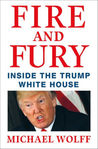
Fire and Fury by Michael Wolff

Fire and Fury: Inside the Trump White HouseFire and Fury: Inside the Trump White House by Michael Wolff


I'm not going to give this a star rating for the time being. I'm just going to share my thoughts for now.

For me, the first question is how do I know anything in this book is true? Well, the most convincing thing is that there isn't a lot of "new" information in this book so much as there is a more complete picture based on behind-the-scenes information from inside sources. A lot of what is in this book has been public information in terms of Trump speeches, interviews, and tweets. The author himself was given White House access and claims to have been there for a lot of the events. About a half of the book is information and impressions that must have been provided by Bannon. Bannon's information appears colored by his dislike of Jared and Ivanka Kushner but does not appear otherwise significantly biased. (By which I mean that Bannon is pretty open about the ways in which he's evil, and isn't too bothered about it.) Jared Kushner himself leaked a great deal of information which seems to be in play in the book as well-- especially trash talk about Bannon. That leaves very little which I have any reason to doubt. Perhaps there isn't any good reason to believe the details of Trump's relationship with Melania, but that appears to be it.

Even though there's not a lot of new or shocking information, I think the book's full narrative of events is useful. For example, before reading this book, I kept thinking that maybe Donald Trump was "crazy like a fox." But after reading this, my impression is that he's just really ignorant (more than I thought) and even less curious about reality than I thought he was. He seems to believe he can just invent his own reality and buys into it to a certain degree. All of this is puzzling and troubling and definitely gives different coloring to how I view recent political events.

The conclusion is that Trump is unfit to be president according to his own advisors. Additionally, his advisors are unable to educate him or restrain him in any meaningful way. He is inconsistent and has poor impulse control. The "fire and fury" quote which the title uses is from Trump's threats to North Korea, but the book ends before the bulk of his North Korea threats. The whole world is at danger from this presidency and everyone knows it, but the people with the power to do anything about it, Senate Republicans, refuse to do anything.

PS: The Prologue and Chapter 1 aren't written as well as the rest of the book. If you find the beginning annoying you might want to reserve judgment until Chapter 2.

View all my reviews

Monday, January 8, 2018

Team of Rivals by Doris Kearns Goodwin

Team of Rivals: The Political Genius of Abraham LincolnTeam of Rivals: The Political Genius of Abraham Lincoln by Doris Kearns Goodwin
My rating: 4 of 5 stars

Really interesting, but too long. I saw lots of places it could have been edited down. (Though it's not really 900 pages. It's about 750 pages, plus about 150 pages of index.)

The abolitionists are the heroes of this book, and of American history. I didn't know much about Secretary of State William Seward or Secretary of Treasury Salmon Chase previous to reading about them about here. My favorite parts were the meetings with Douglass Frederick. I have read Frederick's Narrative of the Life of Frederick Douglass and My Escape from Slavery but I didn't know about these amazing meetings with Lincoln. I'm glad I read his autobiography first, because then when I read about the meetings, I could more fully grasp their significance. These meetings are probably the happiest parts of the book.

View all my reviews

Thursday, October 5, 2017

All the President's Men by Carl Bernstein, Bob Woodward

All the President's MenAll the President's Men by Carl Bernstein, Bob Woodward
My rating: 4 of 5 stars

Having not lived through Watergate it's really interesting to read the book and see how revelations came out little by little, and how ugly the coverup became eventually.

On the other hand, the focus of the book is on the drama and proper practice of journalism though, and if you're not familiar with all the people in the Nixon administration this book can get a little dull in places. Nixon figures very little in the book.

Obviously, I picked this book because I expected to find parallels to the current political climate under Trump. There were many differences- especially that Nixon was very popular at the time of this scandal- but there were also some similarities I didn't know about. The attacks on journalism and journalists, in particular, were strikingly similar. However, to my knowledge, Trump has not yet threatened the lives of any journalists, just his opposition candidate.

View all my reviews
Related Posts Plugin for WordPress, Blogger...