Showing posts with label finance. Show all posts

Sunday, May 13, 2018

Lighten Up by Peter Walsh

Lighten Up: Love What You Have, Have What You Need, Be Happier with LessLighten Up: Love What You Have, Have What You Need, Be Happier with Less by Peter Walsh
My rating: 4 of 5 stars

This is a combination of home organizing advice and financial advice which I love. I did Konmari in 2015 and it led me to organize my financial situation (and to Dave Ramsey books to do so). So I've thought for a while that these two issues are definitely tied together. Peter Walsh is very experienced in helping clients organize their lives and you can tell from the insights he provides in this book.

View all my reviews

Thursday, February 15, 2018

Friday, October 13, 2017

The Upside of Irrationality by Dan Ariely

The Upside of Irrationality: The Unexpected Benefits of Defying Logic at Work and at HomeThe Upside of Irrationality: The Unexpected Benefits of Defying Logic at Work and at Home by Dan Ariely
My rating: 4 of 5 stars

I gave it only 4 stars because there is a lot of overlap with Arely's other book, Predictably Irrational: The Hidden Forces That Shape Our Decisions. In particular, I think Predictably Irrational also addressed how high wages or bonuses are demotivating, how the "Sisyphean condition" at work is demotivating, and how we overvalue our own work.

I really enjoyed the new sections on adaption, "assortative mating" which is economist talk for hot people pairing up together, dating inefficiencies and how to potentially make them more efficient, and the joys of consumer revenge (though I'm certain that's not how Ariely would describe that section). There was also an interesting section on how we tend to follow our own example. Once we have behaved a particular way, we view our choices so positively that we continue to behave in that way. Mind-bending.

View all my reviews

Tuesday, August 22, 2017

The Willpower Instinct by Kelly McGonigal

The Willpower Instinct: How Self-Control Works, Why It Matters, and What You Can Do to Get More of ItThe Willpower Instinct: How Self-Control Works, Why It Matters, and What You Can Do to Get More of It by Kelly McGonigal
My rating: 4 of 5 stars

A strong compilation of the science of willpower but the author didn't explore societal consequences very deeply, so it felt like a more surface-level self-help book. Also, author refused to write a conclusion so the book felt unfinished. Even a simple summary of the information would have been better than just suddenly cutting off the book after her last topic.

View all my reviews

Thursday, July 13, 2017

All Your Worth by Elizabeth Warren, Amelia Warren Tyagi

All Your Worth: The Ultimate Lifetime Money PlanAll Your Worth: The Ultimate Lifetime Money Plan by Elizabeth Warren
My rating: 4 of 5 stars

This is basically Dave Ramsey's plan which I think already existed when this book was written. (Dave published Financial Peace in the 1990s.)

Similarities to Dave: This book is mostly about the evils of credit cards and debt in general. While they don't recommend paying the smallest debt first (classic Dave Ramsey) but neither do they insist you pay the highest interest rate debt first.

Bad differences from Dave: The authors suggest doing a bunch of worksheets that I have no interest in whatsoever.

Good differences from or additions to Dave: One new idea is dividing your needs (50% of income), savings (20%), and fun (30%). The authors discuss how to make sure your fun spending is actually fun and not guilt or emotional-hole spending. Asking for medical discounts and free samples of drugs. Getting drugs from Canada. Good marriage advice. Good warnings about how everyone in the system is trying to rip you off. Warnings about owning a home may or may not be a good deal (including a discussion of closing costs, fees, shady mortgage practices).

One particularly interesting thing is that the authors' concerns about job loss, shady mortgages, and foreclosure seem prescient given that this book predates the 2007-2008 financial crisis.

View all my reviews

Wednesday, July 12, 2017

Love Your Life, Not Theirs by Rachel Cruze

Love Your Life, Not Theirs: 7 Money Habits for Living the Life You WantLove Your Life, Not Theirs: 7 Money Habits for Living the Life You Want by Rachel Cruze
My rating: 4 of 5 stars

Similar to, but better written than Dave Ramsey's books. Most likely to interest you if you're already interested in Dave Ramsey. A little bit of new information, and directed more to younger people, but mostly similar to Dave. Nonetheless, I own this one in lieu of owning a Dave book.

View all my reviews

Wednesday, June 21, 2017

Pound Foolish by Helaine Olen

Pound Foolish: Exposing the Dark Side of the Personal Finance IndustryPound Foolish: Exposing the Dark Side of the Personal Finance Industry by Helaine Olen
My rating: 5 of 5 stars

This book was well-conceived and extremely well-executed. It's organized, researched, and holistic. I wish all the non-fiction books I read were this well-done. I devoured it. I really want everyone to read it and love it.

View all my reviews

Monday, May 15, 2017

Freefall by Joseph E. Stiglitz

Freefall: America, Free Markets, and the Sinking of the World EconomyFreefall: America, Free Markets, and the Sinking of the World Economy by Joseph E. Stiglitz
My rating: 5 of 5 stars

Please, if you live in the United States, I beg you to read this book. The author is a winner of the Nobel Prize in Economics, and he makes the information he's conveying very clear to the non-economist. I realize it's a little old now and would benefit from a little updating, but it's still so valuable to understanding modern economic theory and how political decisions are affecting the economy. New favorite!

View all my reviews

Thursday, April 13, 2017

Without Conscience by Robert D. Hare

Without Conscience: The Disturbing World of the Psychopaths Among UsWithout Conscience: The Disturbing World of the Psychopaths Among Us by Robert D. Hare
My rating: 4 of 5 stars

This was written in the 1990s, so there's a lot of new science on the topic. I recommend reading this along with The Psychopath Inside: A Neuroscientist's Personal Journey into the Dark Side of the Brain by James Fallon- but possibly start with that one. That one will give you the basic science known today, and the author is a functioning psychopath himself who gives a lot of insight into his personality.

This one focuses more on criminal psychopaths because those are the people that more often come to the attention of specialized experts though there are some mentions of more functional psychopaths. It's very heavy on personal accounts of psychopaths and their crimes which certainly keeps the book entertaining but is a little low on the actual science for my taste, perhaps because as previously mentioned there was just less known on the topic in the 1990s.

I think it's important to understand that there's this group of individuals at large in society (and likely heavily rewarded in business and politics) that just aren't subject to the same rules of empathy as the rest of us. Certainly, a lot of non-psychopath people can be emotionally damaged or even assholes for no reason at all, but this complete lack of empathy or authentic feeling is unique and especially dangerous in both criminal and successful noncriminal psychopaths.

View all my reviews

Sunday, March 5, 2017

The Black Swan by Nassim Nicholas Taleb

The Black Swan: The Impact of the Highly ImprobableThe Black Swan: The Impact of the Highly Improbable by Nassim Nicholas Taleb
My rating: 5 of 5 stars

This was a good expenditure of my time. Taleb makes a coherent argument about things I've previously thought about but vaguely dismissed both because of my desire to be normal and my fear of potential "black swans." I say "vaguely dismissed" because I can't actually dismiss my fears by just telling myself they are irrational; I can only avoid taking action to prevent the consequences.

I didn't totally understand all the writing about models in Part 3, but this doesn't seem totally necessary to understanding his larger points.

View all my reviews

Wednesday, March 1, 2017

Fooled by Randomness by Nassim Nicholas Taleb

Fooled by Randomness: The Hidden Role of Chance in Life and in the MarketsFooled by Randomness: The Hidden Role of Chance in Life and in the Markets by Nassim Nicholas Taleb
My rating: 3 of 5 stars

This had a lot of interesting ideas, some new to me. However, the author's hatred of outlines and organizations was apparent well before he confessed it. Taleb seems to appreciate randomness in life, but also in his writing. The central point of his book is that we fail to appreciate how much is attributable to randomness and not to causality or personal ability. He seemed to jump around between examples in various different fields (medicine, journalism, markets), ancient literature, and logic. I would have appreciated this book more if it had a tight structure.

View all my reviews

Friday, February 3, 2017

The Trillion Dollar Meltdown by Charles R. Morris

The Trillion Dollar Meltdown: Easy Money, High Rollers, and the Great Credit CrashThe Trillion Dollar Meltdown: Easy Money, High Rollers, and the Great Credit Crash by Charles R. Morris
My rating: 3 of 5 stars

The first third is the history the US economy after WWII, the middle third is the 2008 financial crisis, and the final third is systematic problems in our economic and political system.

I thought it was going to be a book just on the financial crisis, and if that's what you're looking for there are better books on that topic, such as The Big Short. I agree with the analysis in the last third, and that was my favorite part of the book, but I think that for people that don't already hold these views (or no views on the issue) Morris will fail to convince anyone.

View all my reviews

Sunday, January 29, 2017

The Ascent of Money by Niall Ferguson

The Ascent of Money: A Financial History of the WorldThe Ascent of Money: A Financial History of the World by Niall Ferguson
My rating: 3 of 5 stars

Fergeson tried to present a history of currency and monetary policy but he got mired in the history of it, and it seemed to lose focus. Some sort of point or thesis would have given this shape. He ended up tackling a lot of topics and I learned a few things here and there but not as much as if he'd given some direction to his sometimes conservative and sometimes liberal points.

Also, because he was focusing on the "history" aspect of his book it was organized at first in a chronological order by category of "innovation" but then the chronology fell apart with Chapter 6. This was just a little disorientating in an already thesisless tome.

View all my reviews

Tuesday, January 17, 2017

When Genius Failed by Roger Lowenstein

When Genius Failed: The Rise and Fall of Long-Term Capital ManagementWhen Genius Failed: The Rise and Fall of Long-Term Capital Management by Roger Lowenstein
My rating: 3 of 5 stars

This is an important book about the meltdown of Long Term Capital Management in 1998 written in 2001. It talks about all the elements at play in the meltdown that would repeat itself in the 2007 meltdown. Speaks to the need for government regulation and the irrationality of markets during meltdowns.

That said, it was a lot repetitive and boring material for a layman that doesn't work in financial markets.

View all my reviews

Friday, June 12, 2015

The Total Money Makeover by Dave Ramsey

The Total Money Makeover: Classic Edition: A Proven Plan for Financial FitnessThe Total Money Makeover: Classic Edition: A Proven Plan for Financial Fitness by Dave Ramsey
My rating: 5 of 5 stars

This is good advice for people who aren't succeeding on their own. I know lots of people who are doing well on their own, and doubtlessly they would disagree with a lot of Dave Ramsey's advice. That's fine. If they're doing fine, then they're fine following their own wisdom. Unfortunately the vast majority of Americans are not doing well financially by following the standard "wisdom." A lot of people are doing worse than even they realize. For these people, (um me too), this book is great. I've already addressed a lot of financial issues I was dealing with. Things are not perfect, but they are much improved because I've followed the advice in this book.

I'm on a big self-help kick!

View all my reviews

Wednesday, April 1, 2015

Boomerang: Travels in the New Third World by Michael Lewis

Boomerang: Travels in the New Third WorldBoomerang: Travels in the New Third World by Michael Lewis
My rating: 4 of 5 stars

This book is a collection of 5 essays Michael Lewis wrote after the financial meltdown in 2007-2008. Each essay is a comic look at the disaster of the financial crisis in each of 5 countries: Iceland, Greece, Ireland, Germany, and America (specifically at a state and local level in California).

It's very interesting as an examination of how many people in the financial marketplace had no idea what they were doing, and it's also pretty entertaining and humorous. On the other hand, it's unnecessarily racist against the peoples it examines, with the exception of Americans who somewhat get a pass because supposedly the American culture and abundance itself exceeds what the human mind is designed to cope with. That presentation of huge groups of people, their motivations, and their histories undermines Lewis's expertise of financial players and events.

View all my reviews

Tuesday, November 27, 2012

Lords of Finance by Liaquat Ahamed

Lords of Finance: The Bankers Who Broke the WorldLords of Finance: The Bankers Who Broke the World by Liaquat Ahamed
My rating: 3 of 5 stars

The topic is interesting and the writing is great, and if someone had cut this book in half it would have been 5 stars. As it is, it is nearly unreadable. The first time I tried I quit 50% of the way, but I own a copy so I tried again. The only way I made it through is by powering through the audiobook, meaning that when I zoned out I just rewound a bit a kept going. Every sentence definitely didn't get in my brain.

On the other hand, if you love monetary policy, this is the book for you.

View all my reviews

Thursday, October 6, 2011

SuperFreakonomics by Steven D. Levitt and Stephen J. Dubner

SuperFreakonomics: Global Cooling, Patriotic Prostitutes And Why Suicide Bombers Should Buy Life InsuranceSuperFreakonomics: Global Cooling, Patriotic Prostitutes And Why Suicide Bombers Should Buy Life Insurance by Steven D. Levitt and Stephen J. Dubner
My rating: 5 of 5 stars

I hate this book a little (like the previous one) because it's making me challenge some of my strongly held liberal beliefs. But I'm going to breathe through it and educate myself more on the topics that concern me.

I will say, that again, the writers seem to have left out a lot of things in service to their particular points. For example there was no discussion in all of their positive talk about global climate change that while we wait for solutions certain species are disappearing from the planet while other invasive species are doing a lot of damage in the wrong- suddenly warmer climates. The latter is fixable but the former is possibly permanent, especially for species that have not been genetically mapped.

Also, wash your hands, people!

I know I've been reading especially quickly lately, but I have insomnia and what else am I going to do?

View all my reviews

Wednesday, October 5, 2011

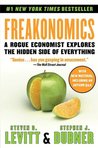
Freakonomics by Steven D. Levitt and Stephen J. Dubner

Freakonomics: A Rogue Economist Explores the Hidden Side of Everything (Freakonomics, #1)Freakonomics: A Rogue Economist Explores the Hidden Side of Everything by Steven D. Levitt and Stephen J. Dubner
My rating: 3 of 5 stars

I think I read this book years ago, but (re?)reading it today, I'm not sure I actually did read it before. It deals a lot with the causes of crime (with regards to abortion, bagels, crack dealing, and guns) cheating (in education, real estate, and um, sumo wrestling), and the prevalence of racism.

The thing that I like about this book is that it relies on data for it arguments on cause and effect in public policy with little to no regard for whether the results happen to align with liberal or conservative ideologies. For years I've argued that our political parties are a mish-mosh of beliefs that don't necessarily fit together in any logical way.

There are a number of things I don't like about this book:

1) It explains some general statistics and regression analysis only towards the end of the book, even though a lot of the data referenced in the book depends on an understanding of this. When they finally explain correlation, even where their isn't a relationship of causation, the authors offer a number of guesses about why the two factors are correlated. Can we do better than guesses? Also these correlation guesses also seem to bias the reader.

2) For those of us who do have some understanding of statistics and studies, the authors don't provide enough information about the studies and data to let us decide for ourselves how accurate the data, or how rigorous the studies are. This despite the fact that the authors talk at length about inaccurate causes from other sources.

3) Because the book jumps around between topics with "no unifying theme" as the authors claim, there is no real deep examination of any issue that allows the reader to form a fully informed thought on an issue. Certainly I'm more interested in the causes of crime now, but I don't particularly have a handle on all the available information or applications of the information. For example, on the issue of guns, the writers present a number of interesting points. Gun ownership in Switzerland is high and they don't have as high a crime rate so "guns don't cause crime." Okay, but do guns cause more death? Why isn't there a comparison with Japan which has no guns, but still has crime- and compare how many crimes result in death? Data divorced of real context is pretty useless. Unfortunately the book jumps around too much to provide adequate context and data for any of the issues it discusses.

4) I understand that morality is not the job of economists but at the same time some application of some moral system is necessary when examining these issues. A number of time the writers joke that a sufficiently high disincentive would cure the problem. For example, if you want to cure bagel theft, you could consistently apply the death penalty. (I'm not sure if this was an actual example in the book but it's close.) Of course the writers are joking! Sort of. They're not joking that would work but they concede that it's out of bounds for most politicians. This leaves the reader unmoored in the very real world of their statistics of cause and effect. It's not enough to say that "some Americans are uncomfortable with number of citizens" in jail, but to apply a real analysis to applying the solutions of imprisonment instead of increasing education, opportunity, and quality of life. Instead the writers seem to dash those off by negating the effects of an improved economy. Is it possible that the gains of a good economy are not affecting all equally for example? Likewise, the emphasis the writers place on abortion is not in any way balanced by the same exploration of increased opportunities, contraception, education, or even incentives to put babies up for adoption for disadvantaged populations.

I get it, data is king. I'm a believer. But failing to paint a complete portrait of the issues results in the partial data. This partial data can be just as misleading as the absence of data. By focusing on one problem at a time and considering all the related issues and data for thinking about the problem holistically the writers might help clarify thought rather than just further confusing it.

Still 4 stars.

View all my reviews
Related Posts Plugin for WordPress, Blogger...