Tuesday, January 23, 2018

Spark Joy by Marie Kondō

Spark Joy: An Illustrated Master Class on the Art of Organizing and Tidying UpSpark Joy: An Illustrated Master Class on the Art of Organizing and Tidying Up by Marie Kondō
My rating: 4 of 5 stars

Basically the same as the first book, The Life-Changing Magic of Tidying Up: The Japanese Art of Decluttering and Organizing. The additional illustrations in this one weren't sufficient to make it substantially more useful. (It had a few little drawings of how to fold or store things.)

View all my reviews

Adultolescence by Gabbie Hanna

AdultolescenceAdultolescence by Gabbie Hanna
My rating: 2 of 5 stars

What is going on here? Is this supposed to be Shel Silverstein for confused and sad college students? Maybe I've been caught off guard because I didn't know the author is a YouTube personality in advance? (I mostly only ever look at BookTube, live news feeds, or late night comedy on YouTube.)

Some of the poems have value as a humorous or silly way to describe the confusion of your 20s or the millennial experience. Even these seem pretty unpolished. Who is the audience for self-deprecating silly poems? Then all of the sudden there are "serious" unhumourous poems. In many of these, Hanna overshoots a lot. Here's just one example, the poem about divorce-- missed the mark by a lot. Probably would have been better to work on a smaller number of good poems rather than 170-something quickly written poems.


View all my reviews

Monday, January 22, 2018

NeuroTribes by Steve Silberman

NeuroTribes: The Legacy of Autism and the Future of NeurodiversityNeuroTribes: The Legacy of Autism and the Future of Neurodiversity by Steve Silberman
My rating: 4 of 5 stars

This is fundamentally a history book about autism and Aspergers and how it's been handled through time. There is also a lot about how adults on the spectrum have done well in their adult lives and lobbied on their own behalfs and on the behalf of children going through what they did. There were some particularly moving and terrifying parts- particularly the section on the holocaust. I feel like the book was helpful to understanding certain issues about disabilities in general and not just the autism spectrum specifically.

There is very little science, unfortunately. The title suggested to me that there would be at least some substantial section on neurobiology.

View all my reviews

Sunday, January 21, 2018

Euthyphro by Plato

EuthyphroEuthyphro by Plato
My rating: 3 of 5 stars

This is sort of interesting in terms of questioning the relationship between ethics and religion, but since it refers mostly to the pagan gods with various different opinions, some of the arguments are not that interesting.

View all my reviews

Saturday, January 20, 2018

Lunch Poems by Frank O'Hara

Lunch PoemsLunch Poems by Frank O'Hara
My rating: 3 of 5 stars

There were lots of parts I loved, but more that I struggled with. I suspect that part of my problem is that I don't read enough poetry yet, so I'll keep trying and hopefully revisit this one later.

Here are my favorite bits:

From "Adieu to Norman, Bon Jour to Joan and Jean-Paul," p. 35:
“the only thing to do is simply continue
is that simple
yes, it is simple because it is the only thing to do
can you do it
yes, you can because it is the only thing to do”

From "Steps," p.58:
“oh god it’s wonderful
to get out of bed
and drink too much coffee
and smoke too many cigarettes
and love you so much”

View all my reviews

Friday, January 19, 2018

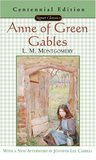
Anne of Green Gables by L.M. Montgomery

Anne of Green Gables (Anne of Green Gables, #1)Anne of Green Gables by L.M. Montgomery
My rating: 5 of 5 stars

What a beautiful, heart-breaking, and mostly joyful book. I will definitely reread this book for years to come. It starts off a bit silly because Anne is just 11 at the beginning of the book, but by the time it ends she's 16, and the pages can barely contain her amazing soul.

View all my reviews

Thursday, January 18, 2018

Meno by Plato

MenoMeno by Plato
My rating: 3 of 5 stars

This dialogue is Socrates's attempt to make the handsome Meno tell him what every instance of virtue has and only virtue has. Meno is a little slow and talks about "getting good things" rather than any soulful or golden-rule type answers.

Shortly thereafter, Meno tries to give up. So Socrates teaches a slave boy some geometry to prove that people are better off realizing all that they don't know rather than thinking they do know and being incorrect.

Then Socrates launches into some strange religious ideas he doesn't substantiate or explain in any convincing way. He ties reason and use of logic to "anamnesis" or recollection of a past life's knowledge.

Anytus comes by and makes death threats to Socrates.

Then is my favorite quote because it is the only part that makes sense to me:
"... none of us remarked that right and good action is possible to man under other guidance than that of knowledge (episteme);-and indeed if this be denied, there is no seeing how there can be any good men at all. "

But then Socrates goes on to say "right opinion" is just as good as knowledge. Seems dubious to me, since "right opinion" would likely still have a basis in knowledge of the things opined about or similar. Although, further research tells me that this might just be a bad translation, and Socrates is actually saying that a logical working out of a solution (via the Socratic method) is as good as knowledge.

Then finally Socrates concludes that since goodness isn't something we are born with, nor something we can learn, it must come from the gods. My online research tells me scholars disagree about whether he is being serious or sarcastically dismissing Meno because he can't be taught anything.

He certainly seems serious in the dialogue but he can't be because he's endeavoring to do the very thing he claims is impossible to do? Though, irony on top of irony, I don't know how effective Socrates has been in this dialogue. At least, I don't feel any smarter after reading this.


View all my reviews

Wednesday, January 17, 2018

The Republic by Plato

The RepublicThe Republic by Plato
My rating: 4 of 5 stars

I am reading Great Books: My Adventures with Homer, Rousseau, Woolf, and Other Indestructible Writers of the Western World and pausing to read any of the books mentioned that I have not already read. In this case, I had read most of The Republic before but couldn't remember it so I went back and read the whole thing.

Great Books didn't give me a lot of help in analyzing or dealing with The Republic so I listened to a library audiobook course about The Republic. This definitely helped in understanding all the confusing arguments Socrates makes.

Plato describes Socrates engaging in a dialogue with Glaucon and numerous other Athenians and non-citizens about a number of topics. The first part is about justice and it mostly matches up to a modern (even Christian) conception of justice. Justice is not about the force of the powerful. It's about the soul, goodness towards even enemies, and the rights of weak.

The next part is about the perfect society, but not really, because Plato didn't believe in a modern-day Western conception of legal equality based on human rights. To his credit, his perfect society is feminist- women can do whatever men can do except things requiring a lot of physical strength. Unfortunately, his society is also based on eugenics, hierarchy with little opportunity for social movement, communist, and without families. To modern ears his perfect society sounds like the perfect Young Adult Dystopian Novel; a cross between The Giver and Allegiant. According to my audiobook course, this Socrates's conception of the perfect society is the direct result of Athen's recent defeat to Sparta. Many of the aspects are either taken from Spartan society or a "correction" of something in Athenian society that Socrates perceives to be at fault for Athen's loss.

Socrates also wanted philosopher kings. As such, the book is also about Socrates's conception of making philosophy a fixed study in the way that math and geometry have fixed answers. Which is certainly an interesting concept. Philosophy (at least popular philosophy) has moved so far away from that idea that the idea of real answers in ethics and philosophy is very appealing.

View all my reviews

Sunday, January 14, 2018

Book Riot's 2017 Read Harder Challenge

Last year, I vaguely attempted Book Riot's Read Harder Challenge, but then I forgot about it. I just checked to see how I did (mostly by accident) and I got 19/24. I might try to get back to the ones I missed (highlighted below) after I finish tackling the 2018 challenge.
  1. Read a book about sports. Forward by Abby Wamback
  2. Read a debut novel. Lots- Chemistry by Weike Wang and Rabbit Cake by Annie Hartnet were favorites
  3. Read a book about books. The Book Thief by Markus Zusak
  4. Read a book set in Central or South America, written by a Central or South American author. Fail.
  5. Read a book by an immigrant or with a central immigration narrative. Exit West
  6. Read an all-ages comic. March I, II, III by John Lewis and Saga Vol. 1 & 2
  7. Read a book published between 1900 and 1950. A bunch, but let's say The Voyage Out by Virginia Woolf
  8. Read a travel memoir. Zen and the Art of Motorcycle Maintenance
  9. Read a book you’ve read before. Civil Disobedience by Henry David Thoreau (because Trump)
  10. Read a book that is set within 100 miles of your location. A Tale for the Time Being by Ruth Ozeki
  11. Read a book that is set more than 5000 miles from your location. Everything Belongs to Us by Yoojin Grace Wuertz
  12. Read a fantasy novel.  A lot but my favorites were Dune by Frank Herbert and The Lathe of Heaven by Ursula LeGuin
  13. Read a nonfiction book about technology. Homo Deus by Yuval Noah Harari
  14. Read a book about war. Dispatches by Michael Herr
  15. Read a YA or middle grade novel by an author who identifies as LGBTQ+. Not sure. Fail?
  16. Read a book that has been banned or frequently challenged in your country. Lady Chatterley's Lover by DH Lawrence
  17. Read a classic by an author of color. Narrative of the Life of Frederick Douglass (best memoir ever)
  18. Read a superhero comic with a female lead. Fail.
  19. Read a book in which a character of color goes on a spiritual journey. Colorless Tsukuru Tazaki and His Years of Pilgrimage by Haruki Murakami
  20. Read an LGBTQ+ romance novel (From Sarah MacLean, author of ten bestselling historical romance novels) Fail.
  21. Read a book published by a micropress. Bad Feminist and Hunger by Roxane Gay
  22. Read a collection of stories by a woman. What It Means When a Man Falls from the Sky by Lesley Nneka Arimah
  23. Read a collection of poetry in translation on a theme other than love. (From Ausma Zehanat Khan, author of the Esa Khattak/Rachel Getty mystery series, including The Unquiet Dead, The Language of Secrets, and the forthcoming Among the Ruins) Fail
  24. Read a book wherein all point-of-view characters are people of color. (From Jacqueline Koyanagi, author of sci-fi novel Ascension) The Hate U Give by Angie Thomas
Related Posts Plugin for WordPress, Blogger...