Showing posts with label ethics. Show all posts

Wednesday, December 11, 2019

The Honest Truth About Dishonesty by Dan Ariely

The Honest Truth About Dishonesty: How We Lie to Everyone - Especially OurselvesThe Honest Truth About Dishonesty: How We Lie to Everyone - Especially Ourselves by Dan Ariely
My rating: 3 of 5 stars

On the pro side, some of these influences are important to know about in one's personal life and in legal and policy work. On the con side, this book is pretty repetitive if you've read Ariely's other books as I have. Additionally, though I'm aware that this is all based on studies, the lack of actual moral or spiritual perspective in the book is disappointing. Compare for example Jonathan Haidt's The Happiness Hypothesis or The Righteous Mind.

View all my reviews

Thursday, December 5, 2019

Doing Justice by Preet Bharara

Doing Justice: A Prosecutor's Thoughts on Crime, Punishment, and the Rule of LawDoing Justice: A Prosecutor's Thoughts on Crime, Punishment, and the Rule of Law by Preet Bharara
My rating: 4 of 5 stars

It started off slowly but was a very interesting non-political book about the practice of law. I wish I'd read it in law school (though it didn't exist then). My only complaint was that I wish I could unread the chapter about cannibals though I suppose there is some value in grappling with the particular problems sociopaths when applying the law.

“Certain norms do matter. Our adversaries are not our enemies; the law is not a political weapon; objective truths do exist; fair process is essential in civilized society.”― Preet Bharara

View all my reviews

Friday, March 22, 2019

The Prophet by Kahlil Gibran

The ProphetThe Prophet by Kahlil Gibran
My rating: 4 of 5 stars

There are lots of really beautiful parts to this. I was surprised by how much I enjoyed it.

“You have been told that, even like a chain, you are as weak as your weakest link.
This is but half the truth.
You are also as strong as your strongest link.
To measure you by your smallest deed is to reckon the power of the ocean
by the frailty of its foam.
To judge you by your failures is to cast blame upon the seasons for their inconstancy.”
― Kahlil Gibran, The Prophet

View all my reviews

Sunday, July 22, 2018

Just Babies by Paul Bloom

Just Babies: The Origins of Good and EvilJust Babies: The Origins of Good and Evil by Paul Bloom
My rating: 4 of 5 stars

An interesting little book with a thesis that is against the Blank Slate. Bloom argues that babies have a rough idea of good and evil, but that how that develops as they grow into adults depends largely on their environment. Interesting, but I've read bit and pieces of the research he references in a number of other places, including many of his sources, so not a lot of it was new to me. The thesis also meandered a bit more than I like.

View all my reviews

Wednesday, January 17, 2018

The Republic by Plato

The RepublicThe Republic by Plato
My rating: 4 of 5 stars

I am reading Great Books: My Adventures with Homer, Rousseau, Woolf, and Other Indestructible Writers of the Western World and pausing to read any of the books mentioned that I have not already read. In this case, I had read most of The Republic before but couldn't remember it so I went back and read the whole thing.

Great Books didn't give me a lot of help in analyzing or dealing with The Republic so I listened to a library audiobook course about The Republic. This definitely helped in understanding all the confusing arguments Socrates makes.

Plato describes Socrates engaging in a dialogue with Glaucon and numerous other Athenians and non-citizens about a number of topics. The first part is about justice and it mostly matches up to a modern (even Christian) conception of justice. Justice is not about the force of the powerful. It's about the soul, goodness towards even enemies, and the rights of weak.

The next part is about the perfect society, but not really, because Plato didn't believe in a modern-day Western conception of legal equality based on human rights. To his credit, his perfect society is feminist- women can do whatever men can do except things requiring a lot of physical strength. Unfortunately, his society is also based on eugenics, hierarchy with little opportunity for social movement, communist, and without families. To modern ears his perfect society sounds like the perfect Young Adult Dystopian Novel; a cross between The Giver and Allegiant. According to my audiobook course, this Socrates's conception of the perfect society is the direct result of Athen's recent defeat to Sparta. Many of the aspects are either taken from Spartan society or a "correction" of something in Athenian society that Socrates perceives to be at fault for Athen's loss.

Socrates also wanted philosopher kings. As such, the book is also about Socrates's conception of making philosophy a fixed study in the way that math and geometry have fixed answers. Which is certainly an interesting concept. Philosophy (at least popular philosophy) has moved so far away from that idea that the idea of real answers in ethics and philosophy is very appealing.

View all my reviews

Sunday, November 26, 2017

Free Will by Sam Harris

Free WillFree Will by Sam Harris
My rating: 5 of 5 stars

This makes me deeply uncomfortable, but nonetheless, it's difficult to dispute. I'm also not comfortable with a leap into public policy based on this, unless as Harris suggested we focus the prison system on containing dangers, instead of punishment.

There is a section about observing our thoughts arise on their own that might make more sense to people that have studied and attempted meditation.

View all my reviews

Saturday, October 14, 2017

Capitalism by Ayn Rand

Capitalism: The Unknown IdealCapitalism: The Unknown Ideal by Ayn Rand
My rating: 4 of 5 stars

I did not give this 4 stars because I agree with most of it or even half of it. I gave it 4 stars because I do think she did a good job of conveying her ideas, and the essays made me think about my views and examine whether they were based on faulty assumptions. Also, I found this book much easier and more entertaining than other Rand books I've read.

Here are just a few issues I had with Rand's ideas. She seems to willfully ignore basic economic concepts such as the tragedy of the commons. ToC is basically the worst world-wide threat right now. Global climate change invalidates so many of her arguments right off the bat. She ignores how money can generate more money without any innovation or hard work. Modern research in the irrationality of man also disproves many of her arguments. Her arguments against anti-trust laws can be effortlessly dismissed by anyone who has previously paid for cable or an internet connection. I think she terribly discounts the good that labor unions have done for working people. Now that labor unions have lost power in many industries I think we've all felt some of the negative effects both in the economy, politics and in loss of our leisure time, though we may not all associate it with that cause. And OMG did she honestly try to make an argument in favor of child labor? That's when you know that unfettered capitalism has really jumped the shark. As an aside, her attack on altruism is diametrically opposed to both Christianity and the current science of happiness.

There were also interesting parts that challenged me to think - and occasionally I even agree with some things. For example, I agree that many government subsidies are a horror. I have long had an intense dislike of the corn subsidy and its terrible results for both our economy and health. Nor am I a fan of train subsidies. Clearly, the price point for trains should be in between buses and airplanes? Yet trains often cost the same or more as a flight. I am also interested in Rand's argument about unemployment being related to government interference in the market. That seems plausible when government interference in immigration is considered, but I don't know enough about the research and numbers - and a fully mobile world labor market doesn't seem likely anytime soon. She appears to be mostly right about the hypocrisy of both political parties with regards to religion and reason.

Rand makes the argument that it's not true that too much of a good thing is always bad, and that's correct that it's not ALWAYS true. But it is sometimes true. (Even excessive water consumption can kill you.) I don't think she succeeded in proving that unfettered capitalism is better than capitalism with regulation.

View all my reviews

Thursday, September 28, 2017

Major Barbara by George Bernard Shaw

Major BarbaraMajor Barbara by George Bernard Shaw
My rating: 5 of 5 stars

Talk about unreliable narrators! The characters' intentions are a muddle, and this is surely done intentionally. The debate about good versus evil and Christianity versus capitalism is crystal clear and deeply depressing. Nothing changes in history.

Andrew Undershaft is pretty explicitly an antichrist figure. The Jesus of the Bible is clear about morality vis-Ă -vis poverty and wealth. I think Barbara represents most people- knowing it's all wrong but drawn to the allure of it nonetheless. Not to mention that while Undershaft could make his arguments with wealth from any industry and be more convincing, Shaw makes his industry the weapons industry, the business of which is literally to kill as many humans as possible. This makes Undershaft's arguments almost impossible to accept. I think Shaw made that choice on purpose.

I don't really see the play as anti-Christian just because Andrew Undershaft appears to prevail. I thought of it as having characters presenting two views. The expression for presenting an argument you don't necessarily agree with is "Devil's Advocate" for a reason... there are always great arguments against goodness or God, not that those are always the same thing in a debate.

I guess between Andrew's argument, and Shaw's little sticky points- I'm not persuaded by Andrew. The little sticky points being: Andrew makes the tools of war, Andrew doesn't pretend to care about charity at the beginning but then later uses it to win Barbara to his side, Barbara seems moved to Andrew's side more by greed than a continued desire to do good (though I'm not completely certain here), and Cusin's general spinelessness. And at the end, we're uncertain if Barbara has lost her soul or not.

It might just be a spoof on both sides and on society in general. Perhaps Shaw's view is: You can live in wretched poverty or destroy everything with civilization. Pick your poison.

Definitely the kind of play that's worth rereading for me. Lots to think about.

View all my reviews

Friday, June 23, 2017

My Own Words by Ruth Bader Ginsburg

My Own WordsMy Own Words by Ruth Bader Ginsburg
My rating: 2 of 5 stars

I love The Honourable Ruth Bader Ginsburg. I think she's one of the most brilliant Americans alive today. This collection of speeches is a mess though. For example, one of them is a brief introduction for Gloria Steinem at an event for her, but we learn nothing about either Ginsburg or Steinem for the inclusion of the introduction. There are two speeches that are actually her husband's, and he has the same opening joke in them. There is an entire cut-and-paste of the opera, Scalia/Ginsburg, which was just the worst. This book could have been really great, and it does have some great feminist writing in it, but you'll have to wade through a lot of poorly edited content to get to it.

View all my reviews

Tuesday, April 4, 2017

The Virtue of Selfishness by Ayn Rand

The Virtue of Selfishness: A New Concept of EgoismThe Virtue of Selfishness: A New Concept of Egoism by Ayn Rand
My rating: 1 of 5 stars

Note: Objectivism is deeply anti-Christianity, and anti-religion in general. You should not trust a politician that claims that he is both a Christian and a believer in the philosophies of Ayn Rand. He does not understand either Christianity or Objectivism, or possibly both, or he's a huge liar.

That said, this book isn't really what it sounds like. It's a collection of essays by Ayn Rand and Nathanial Branden that are not pro-heathenism per se. Rand and Branden try to explain how the philosophy of objectivism is that individuals need to think through their own rational system of morals and ethics. That's a good start. The problem is that a lot of the points in Rand's essays are either not logically sound or based on incorrect premises. (And I was pretty bored by Branden's sycophantic essays.) It's like swimming through mud.

For one thing, Rand refers a great deal to biological examples, and she repeatedly gets biology wrong. Obviously, she's not a biological scientist, and we know more today about biology than in the 1960s, but she premises her ethics arguments on the natural world- and her basis is incorrect. She believes that living creatures are driven primarily by continuing to live- that life (and the avoidance of pain) is the fundamental value of the natural world. That's only sort of true. The natural world is more driven by reproduction which means that animals regularly act on behalf of other related animals. Even on a cellular level there's the theory now that mitochondria used to be a separate free-living organism that combined with other organisms (endosymbiosis theory). Her idea that humans are emotionally and ethically tabula rasa when they are born isn't scientifically supported either. These are just a few examples, she gets a number of her points about science and animals either factually wrong or logically wrong. It reminds me of the absurd co-opting of evolutionary principals for political "Social Darwinism" nonsense.

As for her logical failures, (though I'm sure that some American Republicans agree with her) she makes no rational distinction between armed robbery, confiscation of all your property in a communist system, and taxation. She makes no distinction between altruism generally and complete self-sacrifice. Her views on love collapse into such total nonsense that arguing against them would require an entire treatise. She also incorrectly predicted many of the results of capitalism so this makes her arguments for unhindered capitalism look obviously foolish.

I do appreciate her condemnation of people's failure to engage in the pursuit of knowledge and reason. I also enjoyed her condemnation of communism.

View all my reviews

Wednesday, March 29, 2017

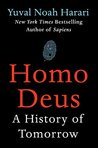
Homo Deus: A Brief History of Tomorrow by Yuval Noah Harari

Homo Deus: A Brief History of TomorrowHomo Deus: A Brief History of Tomorrow by Yuval Noah Harari
My rating: 5 of 5 stars

Fascinating and intricate. Harari builds a spiderweb, starting with the history of human thought, building and building until you understand how plausible his predictions of the future are.

This was the first time I had encountered this particular explanation of why we should study history- not just to avoid repeating it, but to understand that the actions that we take as a given are actually options. (See his section on lawns.)

This was the first time I had considered humanism in the particular way he explains it, and the first I even heard of dataism. Strongly recommend this book for its intellectual content, but it's worth mentioning that it was also so fun to read that I could not stop.

If you want the super short summary, Harari wrote this article for the Financial Times: https://www.ft.com/content/50bb4830-6...

View all my reviews

Saturday, March 18, 2017

Wednesday, February 1, 2017

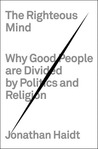
The Righteous Mind by Jonathan Haidt

The Righteous Mind: Why Good People are Divided by Politics and ReligionThe Righteous Mind: Why Good People are Divided by Politics and Religion by Jonathan Haidt
My rating: 5 of 5 stars

This is an excellent biological science and anthropology book about the development and driving force behind ethics, religion, politics, and tribalism. It will help you view your friends and family members of the other political party with increased understanding and respect. It appears to be mostly directed at United States liberals to help them understand the moral framework of United State conservatives, but it also provides an explanation of the liberal and libertarian framework to conservatives. It is based on controlled studies of liberals, conservatives, and libertarians in the US. There was a lot of information that was new to me, such as the effects of ethnic diversity and culture education. It is not condescending to any political party or religion, which is not the same as saying that everyone will like what Haidt says in this book. In fact, I predict people of both parties will find plenty to try to dispute.

For me, there were some problems with this book which are mostly outweighed by what it contributes. One is that this was written pre-Trump era and it won't help you contemplate the blatantly racist supporters and members of the administration. (Please don't deny these people exist, they have been very vocal in a number of places.) Two is that I think that Haidt goes too far in numerous places with his own policy analysis both in favor and against liberal or conservative beliefs. As a liberal myself, when he says that some policy provides money and therefore dampens the necessity of marriage, I think of people - mostly women- stuck in abusive marriages because they can't afford to get themselves and their children out. Also, there were comments about diversity and cultural education which, whether they are accurate or not, seem to need more context and balancing particularly now that we are facing so many problems with racism in our country.

Also, since a lot of conservatives claim that Christianity is the basis of their moral framework, I'd like to see what Jesus's moral matrix looks like. I think a lot of liberal Christians would think that Jesus's moral matrix would value Care-Harm more than Fairness-Cheating, but that might or might not be a biased view. (See figures 12.2-12.4, http://righteousmind.com/wp-content/u...)

I also strongly recommend Haidt's book "The Happiness Hypothesis: Finding Modern Truth in Ancient Wisdom," and you might want to read that one first since this book seemed to build on some ideas he fleshed out in there.

Bonus for my UVA friends- Haidt wrote this book while he was a professor at UVA and he uses UVA Wahoo fans as examples of the joys of groupish behavior.

View all my reviews

Monday, November 14, 2016

Predictably Irrational by Dan Ariely

Predictably Irrational: The Hidden Forces That Shape Our DecisionsPredictably Irrational: The Hidden Forces That Shape Our Decisions by Dan Ariely
My rating: 5 of 5 stars

Ariely explains how all humans are irrational in certain circumstances. He discusses how we attribute value to something, and how marketing exploits us to attribute more value to something. How we regularly make choices that reduce our ability to be content with our choices.

He explains how money itself - or it's absence- causes us to view decisions in an entirely irrational light.

Other things influence our decisions in a way we would ourselves not predict: social norms, arousal, placebos, and even the cost of placebos.

I think this is an extremely important book in helping people to understand how very difficult it is for all of us to be objective, though we all believe ourselves to be.

View all my reviews

Friday, October 21, 2016

41: A Portrait of My Father by George W. Bush

41: A Portrait of My Father41: A Portrait of My Father by George W. Bush
My rating: 5 of 5 stars

I loved this book. Former President George W. Bush writes a biography of his father former President George H. W. Bush. I'm a liberal and so I don't think all the interpretations of events are precisely accurate, but I moved by the way George H. W. Bush lived his life in public and in private. I am also impressed by his accomplishments. This is both a celebration of George H. W. Bush specifically and American values and democracy generally. Over and over again, W talks about H.W.'s efforts to reach out to political opponents at home and abroad. As a result, he developed some of the surprising friendships, including with the Clintons and Obamas.

This is also an amazing palate cleanser for everyone suffering through the current election.

View all my reviews

Tuesday, October 4, 2016

Yes Please by Amy Poehler

Yes PleaseYes Please by Amy Poehler
My rating: 5 of 5 stars

I love this book. It's very unexpected. I actually listened to the audiobook which I strongly recommend because you can hear not just Poehler but also her amazing audiobook guests. Poehler is brilliant and empathetic and has a lot of interesting things to say and good advice. My favorite is, "Your career is a bad boyfriend." Ugh, yeah, mine was an abusive boyfriend for a while. I cried no fewer than three times. Maybe not exactly what she was going for with a humor book, but it's really touching. I also laughed aloud while walking around my neighborhood so now my neighbors might think I'm crazy. It's all good.

View all my reviews

Thursday, August 18, 2016

When I Was a Child I Read Books Marilynne Robinson

When I Was a Child I Read Books: EssaysWhen I Was a Child I Read Books: Essays by Marilynne Robinson
My rating: 5 of 5 stars

This collection of essays by Robinson on religion, politics, patriotism, and science is extremely moving. I think every American should read it. The collection is front-loaded and the best essays are at the beginning, but those are so remarkable. Robinson has read and studied widely, and the depth of her understanding is inspiring. Her genius with expressing her thoughts in writing is even more awe-inspiring, and almost every paragraph in the early essays made my heart leap.

View all my reviews

Thursday, June 2, 2016

The 7 Habits of Highly Effective People by Stephen R. Covey

The 7 Habits of Highly Effective People: Powerful Lessons in Personal ChangeThe 7 Habits of Highly Effective People: Powerful Lessons in Personal Change by Stephen R. Covey
My rating: 3 of 5 stars

I like that this book focuses on character and ethics. It also focuses on both business and family life- it's probably even better for it's family life information. But there's not a lot of enlightening material here. I think it probably was when it was first written, but since then particular aspects of this book have been studied further, expanded upon, and written about.

I do like the focus on your own death in the second habit- twisted but true. I tend to think in these terms a lot already though I'm not sure I have any better answers for thinking this way.


View all my reviews

Thursday, March 31, 2016

The Happiness Hypothesis by Jonathan Haidt

The Happiness Hypothesis: Finding Modern Truth in Ancient WisdomThe Happiness Hypothesis: Finding Modern Truth in Ancient Wisdom by Jonathan Haidt
My rating: 5 of 5 stars

This is the best book I've read so far on happiness, love, and mindfulness, morality, and life purpose specifically because unlike the other books that I've been reading on the topic it combines science and philosophy on all of these topics instead of taking them individually. The author is not afraid to tackle some controversial topics, necessary because of the discussion of how an innate disgust system relates to our sense of morality. The author is honest about his own "bias" as he is not religious, but he maintains a professional respect towards world religions and seeks to understand what they can contribute to an understanding of psychology, happiness, and even societal well-being.

View all my reviews
Related Posts Plugin for WordPress, Blogger...